Skip to content
AEGIS Hedging
Market Insights

LNG

US LNG Acts as Key Swing Supply in Global LNG Shortage

Thomas Liardon3 min read

The outlook for the global LNG market has shifted this year. While LNG facilities have been running at maximum capacity in the US since 2020, pre-Iran war ...

The outlook for the global LNG market has shifted this year. While LNG facilities have been running at maximum capacity in the US since 2020, pre-Iran war analyst expectations included a possibility that the large amount of liquefaction capacity coming online in 2027-2028 could potentially cause a late decade LNG glut. However, due to the prolonged disruption to supply flows out of the Middle East this year and subsequent force majeures that could linger much longer, it’s looking increasingly likely that the US could be a key swing supplier in an overall undersupplied global LNG market through the end of the decade.

Prior to the closure of the Strait of Hormuz, global LNG export volumes were hovering above 1.88 tcf per month, or around 60 Bcf/d. 11.1 Bcf/d of these volumes came from Qatar, from their LNG export terminal in Ras Laffan. However, since March, LNG exports from this terminal have averaged only around 35-60 Bcf per month, or around 1-2 Bcf/d. Over the last 7 months of conflict, volumes elsewhere in the world have not risen to offset the losses from Qatar. Accordingly, global LNG exports have fallen since the war started to 1.53 tcf last month, or just 51 Bcf/d.
Going forward, two out of Qatar’s 14 liquefaction export trains, trains S4 and S6, and one gas-to-liquids (GTL) facility were damaged in Iranians aerial strikes in March. QatarEnergy estimates 12.8 mtpa (1.7 Bcf/d equivalent) will remain locked behind a 3-5 year repair timeline regardless of when the Strait of Hormuz reopens.

One of the key regions feeling the impact of the supply slowdown is Europe. Since regasification of LNG accounts for roughly half of the EU’s total natural gas supply, the slowdown in Global LNG exports has directly impacted European injection season. The European gas storage target was cut by 10 percentage points from 90% to 80% on August 20, 2026 by the EU Commission, which is equivalent to roughly 390 Bcf. Furthermore, the EU entered heating season on October 1 nearly 20 percentage points below the five-year average for storage.

The EU Commission’s struggle to incentivize regasification into storage is represented in the TTF price curve. Prompt TTF prices settled at $24.87/MMBtu yesterday, which sits above the Winter 26/27 price at $24.82.

Asia is another region experiencing higher prices associated with LNG supply disruption. The benchmark Asian LNG price, JKM, settled at $25.88/MMbtu on October 6, up around $16 from pre-conflict prices.

With supply disruptions potentially continuing well into Winter, and gas storage at depressed levels, Europe and Asia could experience a winter of significantly elevated gas prices. Low global gas storage levels persisting in 2027 could continue to incentivize US LNG facilities to operate at full capacity, even as additional capacity comes online with the construction of new LNG facilities and enhancements of existing ones.

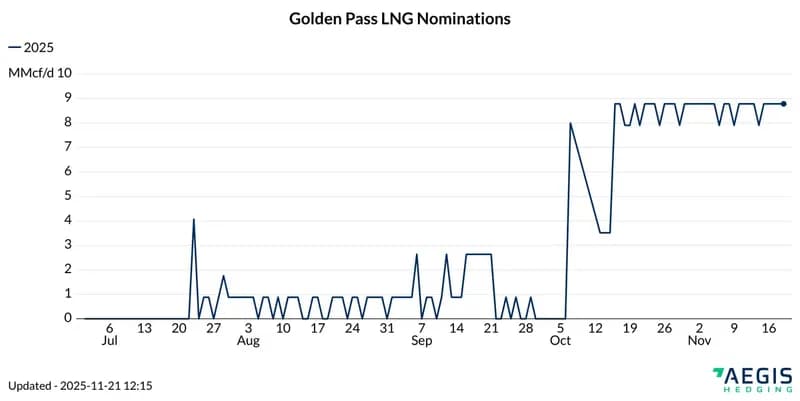
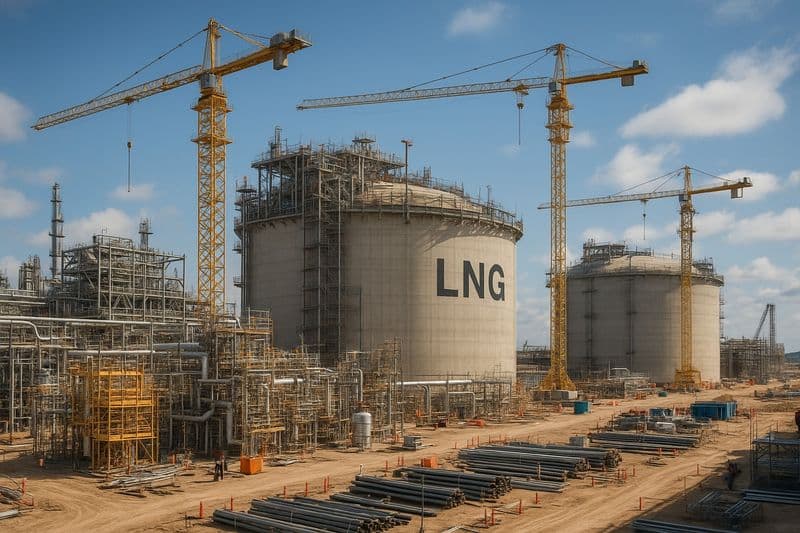
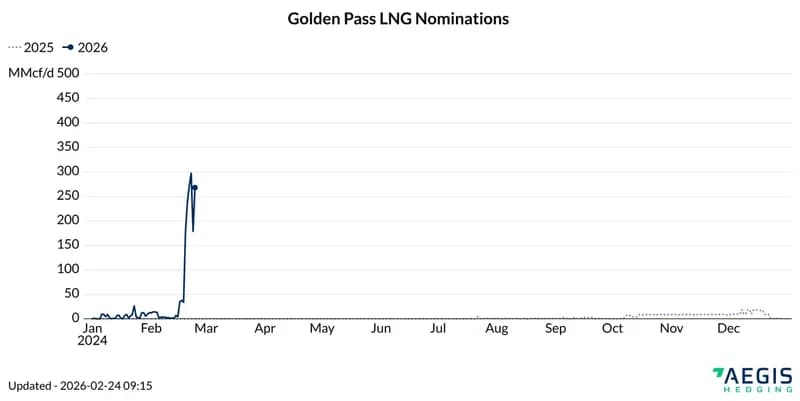
US LNG capacity is expected to increase steadily through the end of the decade. Golden Pass will pull 2.5 Bcf/d of feedgas demand once all three trains are fully operational. Analyst estimates guide for Train 3 completion by mid-2027, but slow ramp up at Train 1 may signal a delayed ramp up in Trains 2 and 3. Including Golden Pass LNG, the US is expected to add roughly 10 Bcf/d of feedgas demand through 2029. Of this amount, 5.32 Bcf/d of additional LNG feedgas demand is expected by the end of 2027.

The loss of Qatari supply should keep the global LNG market structurally tight, limiting the risk of global oversupply and supporting continued utilization of US export capacity. As a result, US LNG exports should remain near full capacity outside of seasonal fluctuations and unplanned outages, providing a persistent source of demand for domestic natural gas.

Want this in your inbox?

AEGIS market analysts publish research across crude, natural gas, NGLs, refined products, metals, and rates.

Stay Ahead

Get market insights delivered to your inbox — for free.

We use a few essential cookies to make our site work, including one that counts how many reports you have opened. Analytics cookies are used only with your permission, and you can change your mind at any time. Learn more about cookies in our privacy policy.