Copper supplies are expected to tighten further in 2023 and beyond. Yesterday, the world's largest copper miner, Chile's Codelco, told the local newspaper, El Mercurio, that they have set their 2023 production estimate at 1.45 million mt. For the five years between 2023 and 2027, the company expects to average 1.5 million mt.
Last week, Codelco lowered its 2022 production estimate range to between 1.49 million mt and 1.51 million mt, down from a prior estimate of 1.61 million mt. These production estimates are due in part to declining ore grades and lower recovery levels at several sites. In addition, several construction projects have been halted due to worker fatalities, thereby delaying future production endeavors.At 5.6 million mt, Chile was the world's largest copper producer in 2021, according to the USGS. Total world production was 21 million mt that year. Although Codelco's predicted drop in production this year is only approximately 0.5% of global mine production, this could add to the supply deficit of refined copper. The same is true for the expected declines into 2023 and beyond. According to the International Copper Study Group's most recent estimate, the world refined copper balance is currently in a deficit of 72,000 mt. |
|---|
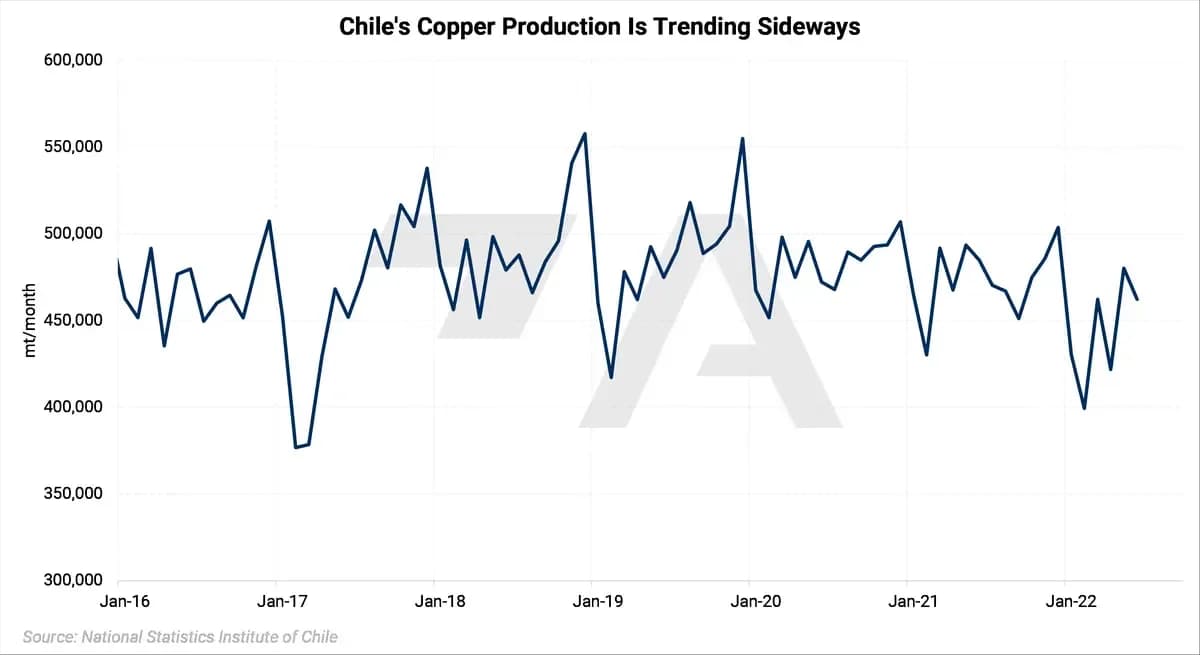
Since 2016, Chile's copper production has largely trended sideways. On an annual basis, production has ranged from 5.570 to 5.896 million mt. |
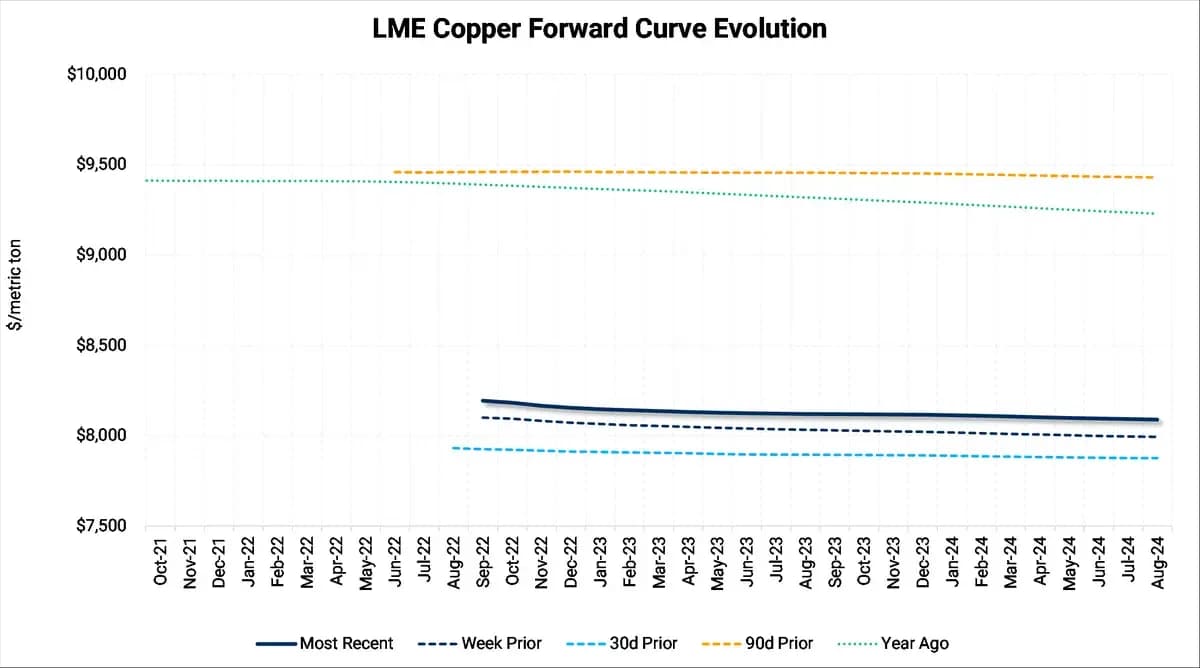
Due to the recent selloff, LME Copper's forward curve has shifted lower by nearly $1,300/mt since June 1. Also, the forward curve is now in backwardation, meaning that futures prices are lower than spot. Therefore, this could be a good time for copper end-users such as home builders to hedge future needs. |
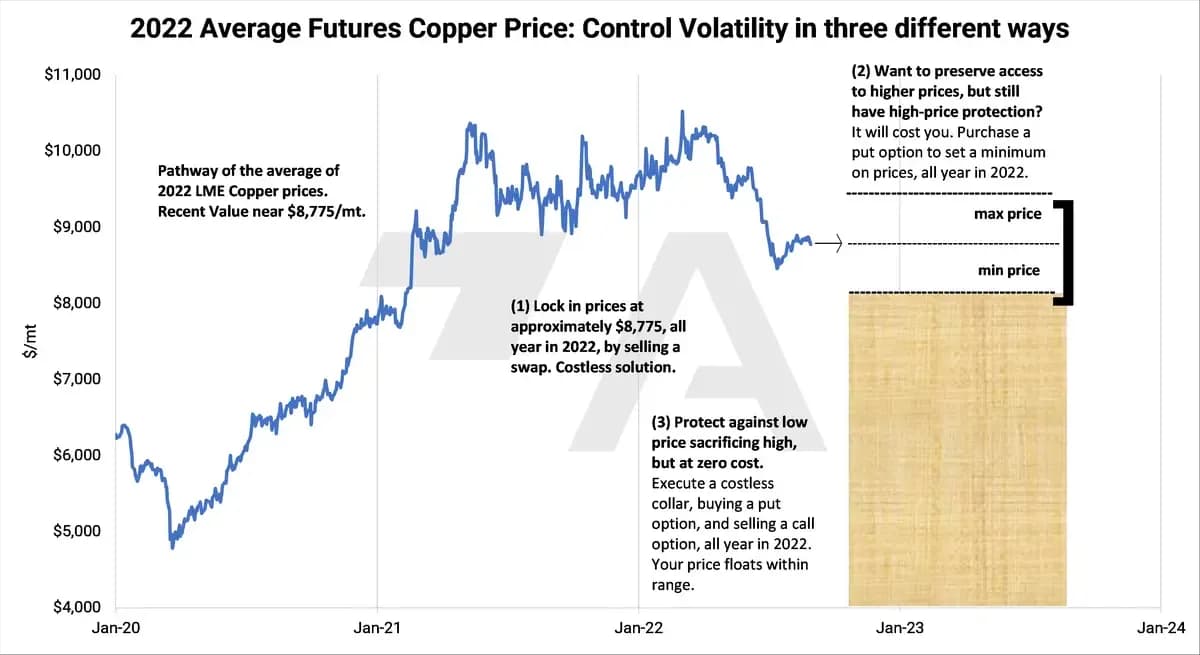
Are you a copper end-user looking to hedge your future needs? Consumers can hedge copper in various ways, as we detail below. Buying swaps or call options are viable strategies, as either would establish a maximum copper price. Such positions are standard for consumer hedging; however, they can result in opportunity costs or cash costs if metal prices decrease. Please contact AEGIS for specific strategies that fit your operations. |