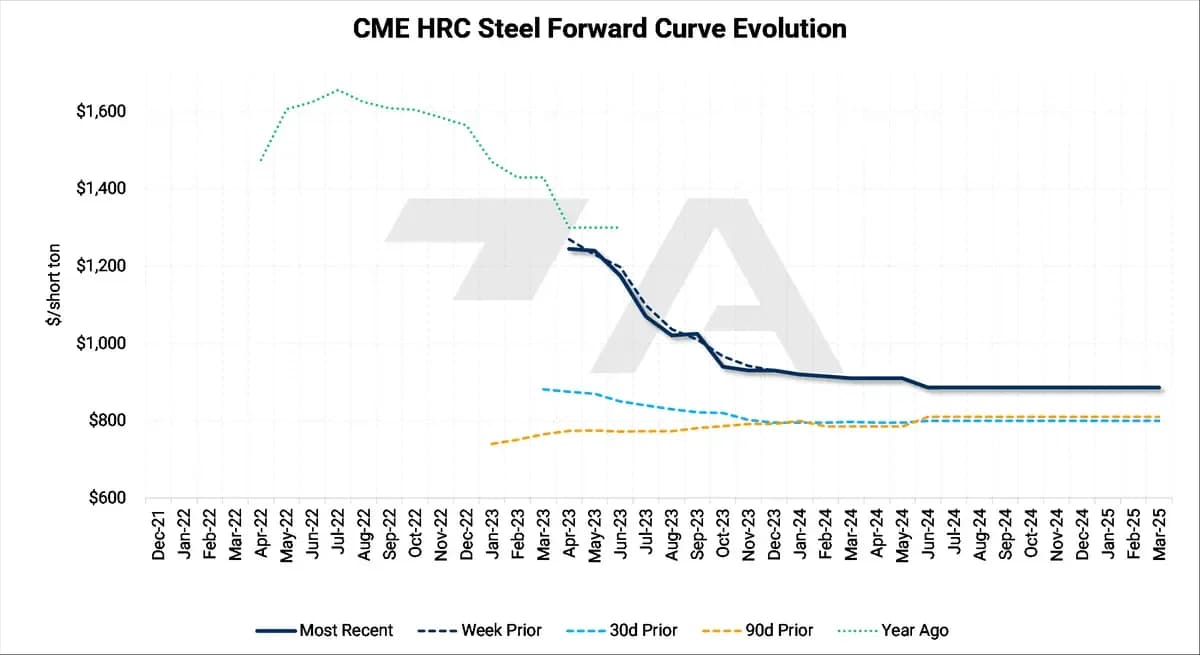
Most American steel producers have recently raised their base price for physical sales to $1,100/st or higher, up from around $500/st in late November. These price hikes in the physical market have also caused prompt month CME HRC futures (March) to rally nearly $300/st since mid-January; however, the futures forward curve has not rallied as significantly. Even with the recent rally, the currently backwardated market favors consumers, as futures are far below the prompt month.
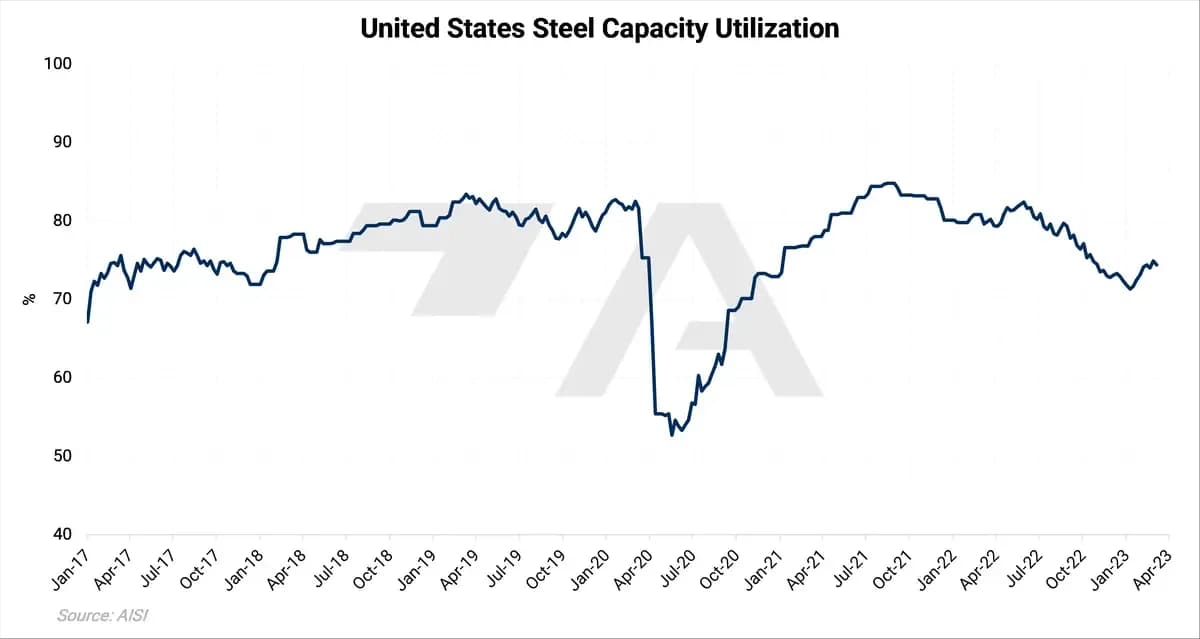
Steel mill capacity utilization, which is a measure of how much available production capacity the industry is using, has been dropping in recent months. AEGIS notes that this decrease in capacity utilization comes as steelmakers remain disciplined about production while demand has remained high. This is why steel mills have been to maintain, and the market has withstood, the price hikes since late last fall. |
|---|
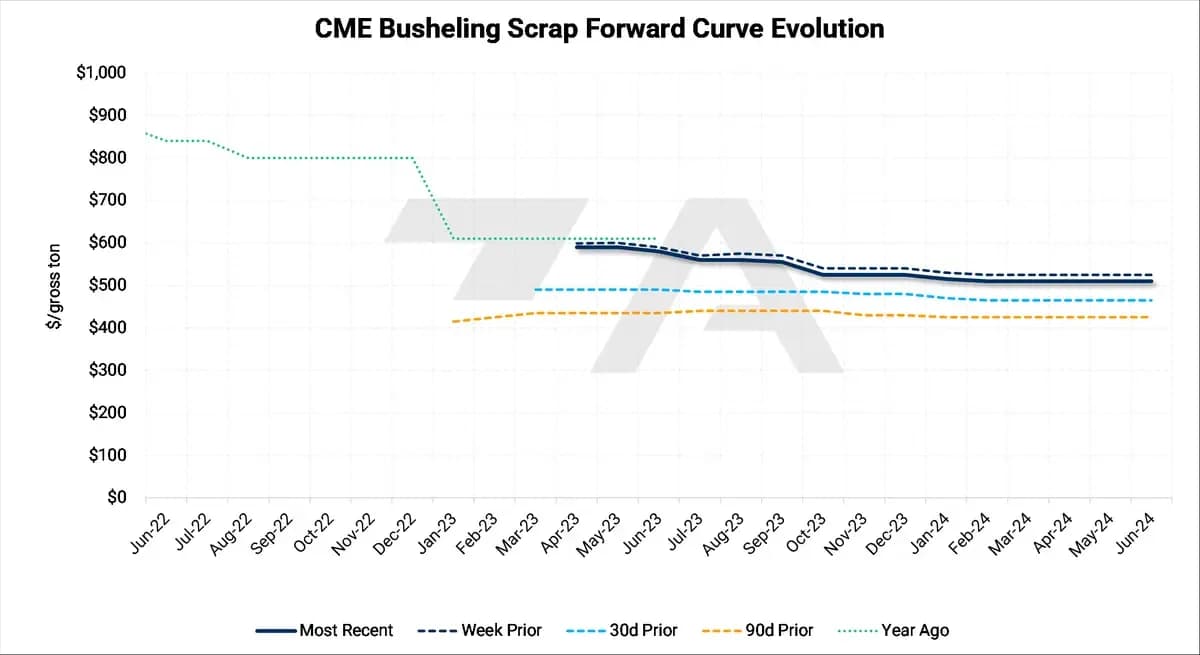
Most electric-arc furnaces use busheling scrap as a raw material. Prompt month (April) CME Busheling Scrap prices have rallied nearly $160/gT since mid-December, which has helped pushed finished steel prices higher. Please note that the futures forward curve is currently backwardated, which favors scrap buyers who need to do longer-term hedging. |
As we stated above, price hikes in the physical market have caused prompt month CME HRC futures (March) to rally nearly $300/st since mid-January. Like busheling scrap, the CME HRC futures forward curve is currently backwardated, which favors steel end-users who need to do longer-term hedging. |
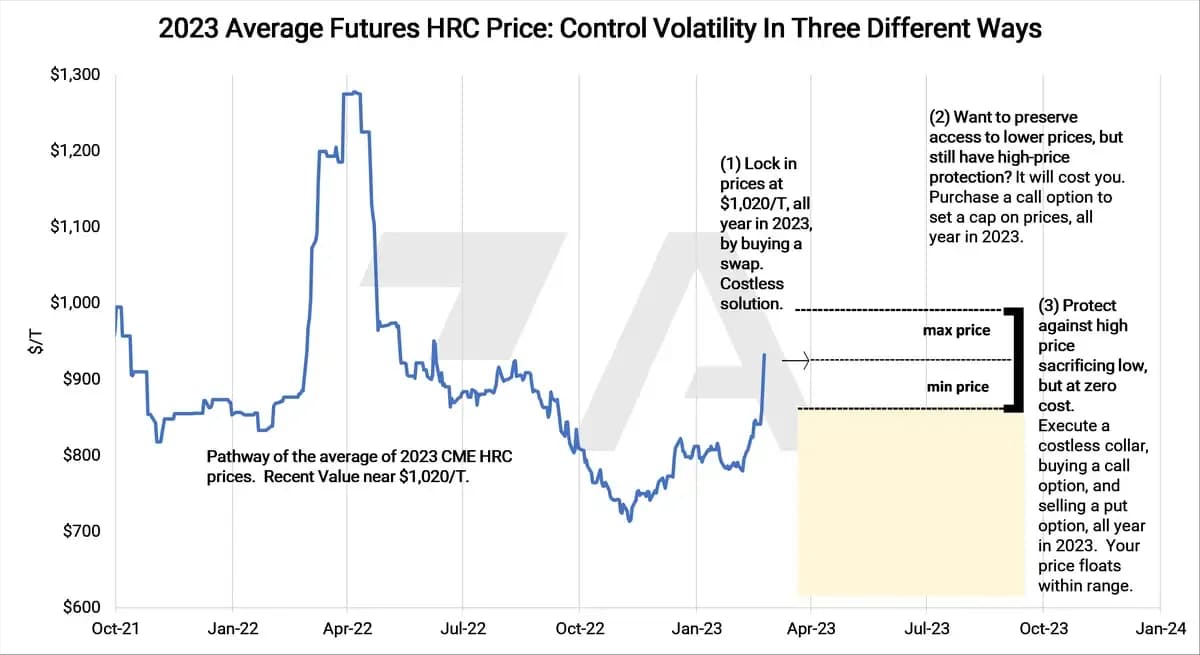
So how should steel buyers hedge their end-usage? Below we detail several ways that steel end-users can hedge HRC Steel via CME HRC swaps or options. Please contact AEGIS for further details and specific strategies. |