Production of green steel is set to increase in the coming years as producers aim to reduce their carbon footprint. Steel production is among the three biggest generators of carbon dioxide, according to research firm McKinsey. In 2020, every ton of steel produced emitted on average 1.89 tons of carbon dioxide, according to the World Steel Association.
Traditional Steel Production Methods Explained. |
|---|
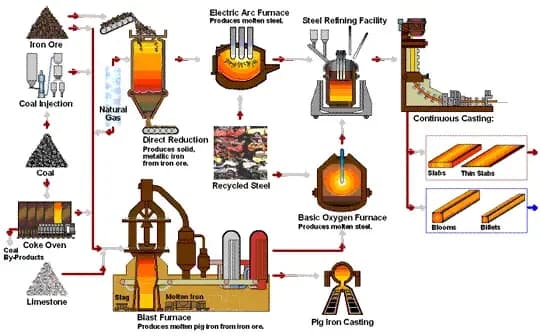
According to the World Steel Association (WSA), steel is manufactured by two methods: blast furnace-basic oxygen furnace (BF-BOF) or Electric Arc Furnace (EAF). The WSA describes the BF-BOF method as: “First, iron ores are reduced to iron, also called hot metal or pig iron. Then the iron is converted to steel in the BOF. After casting and rolling, the steel is delivered as coil, plate, sections or bars.” Approximately 73% of global production is via blast furnace; however, only about 30% of American steel is produced in this method. EAFs now account for over 70% of American steel production. These furnaces produce steel by using an electrical current to melt scrap steel, direct reduced iron, and/or pig iron, to produce molten steel. According to the WSA, EAFs can produce “significant energy and raw material savings: over 1,400 kg of iron ore, 740 kg of coal, and 120 kg of limestone are saved for every 1,000 kg of steel scrap made into new steel.” |
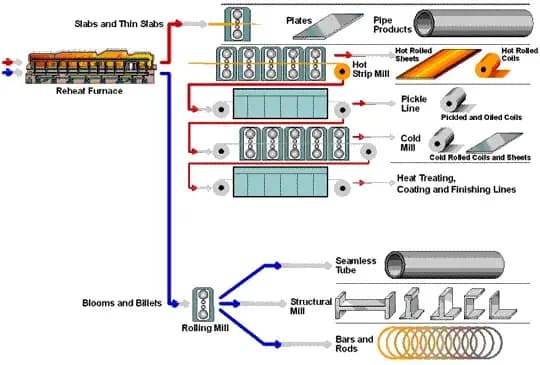
The following graphic shows the electric arc furnace and blast furnace steel production processes. GIF courtesy of the American Iron and Steel Institute. (For a slightly larger view, please visit https://www.steel.org/steel-technology/steel-production/) |
How is green steel different? |
Green steel is physically the same as “traditional” steel; however, green steel is produced from a different, low-emission or fossil-free energy source, than traditional steel. According to Bloomberg, “the cleanest process that exists today, although still at the pilot stage, uses green hydrogen, produced from renewable electricity, instead of burning coal. Biomass also has been used as an alternative fuel. Makers are working on recycling, as well, but the amount of scrap steel available will set the ceiling for the impact it will have. All these methods will be needed for the industry to effectively decarbonize.” |
Who is making strides in green steel production? |
In November 2021, Bloomberg compiled the following list of companies who are striving for green steel production: * Sweden’s SSAB AB produced what they called the first fossil-free steel this summer, using a process dubbed HYBRIT (Hydrogen Breakthrough Ironmaking Technology) which utilizes green hydrogen. Also known as HYBRIT green steel. Volvo Group bought the first delivery and turned this fossil-free green steel into a dump truck unveiled in October. * ArcelorMittal SA plans to build an iron ore processing unit in Spain by 2025 that will use green hydrogen. * Rio Tinto Group, the world’s top iron ore producer, has begun a pilot project that uses plant matter, or biomass, as a replacement for coking coal to produce low-emission steel. The process, developed with the University of Nottingham in the U.K., blends the biomass with iron ore, which is heated by a combination of gas released by the biomass and renewable-powered microwaves to convert the ore into metallic iron. * The world’s largest steelmaker, China Baowu Steel Group Corp., has committed to carbon neutrality by 2050, a decade earlier than the government’s national target. Other companies are making targeted commitments to reduce greenhouse emissions. For example, in July 2021 Metal Center News reported that “Steel Dynamics is targeting a 20 percent Scope 1 and Scope 2 combined greenhouse gas emissions intensity reduction across its EAF steel mills by 2025 and a 50 percent reduction by 2030, compared to a 2018 baseline. Additionally, the company plans to increase the use of renewable electrical energy for its EAF steel mills to 10 percent by 2025 and 30 percent by 2030.” ArcelorMittal recently started issuing "XCarb™ green steel certificates." According to their website, these credits "allow customers to report an equivalent reduction in their Scope 3 emissions, in accordance with the Greenhouse Gas Protocol" and are "are specifically designed for ArcelorMittal’s flat steel products made from iron ore in a blast furnace." Also, Professor Veena Sahajwalla led UNSW Sydney's Sustainable Materials Research and Technology (SMaRT) Center to a prestigious award where they were recognized for a ground-breaking recycling process using Polymer Injection Technology. Polymer Injection Technology is a process used to create a version of green steel, that utilizes the electric arc furnace (EAF) and its high temperature to transform old waste tires and plastics in the production of premium quality steel. |
Will end-users pay more for green steel? |
According to steel producers, end users are willing to pay a premium for green steel over traditional. “The automotive industry for sure will accept higher prices because of green steel,” Jörg Brinckmann, head of ironmaking and green steel at SMS Group, stated at a conference June 2022. At a different conference in June 2022, Cargill’s Lee Kirk, managing director for metals at Cargill, affirmed, “Green steel premiums are coming…. We expect a shortage of 5-15 million tonnes of green flat steel in Europe by 2030. It’s going to be in scarce resource.” |
Can I hedge my green steel production? |
Absolutely!! For CME HRC Steel, liquidity for swaps has been growing year-over-year for the past five years and is sufficient enough to accommodate firms of all sizes. Please contact AEGIS at metals@aegis-hedging.com for specific strategies that fit your operations. As for environmental credits, please contact AEGIS at environmental@aegis-hedging.com for specific strategies that fit your operations. Companies purchasing steel can offset the Scope 3 emissions associated with that steel whether standard or green through purchasing voluntary carbon offsets. These are same carbon offsets companies can use to offset their own emissions at their facilities (Scope 1) as well to offset the emissions from the power they purchase off the grid (Scope 2) |
American Steel Production Data |
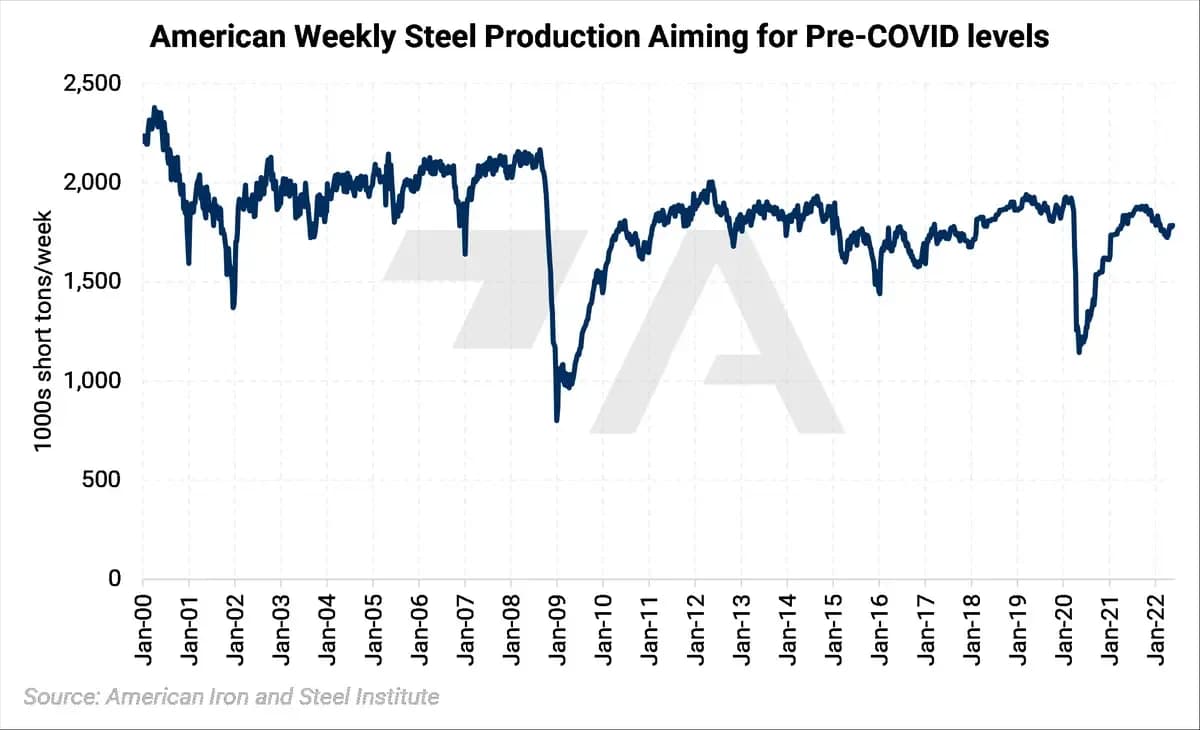
Weekly steel production dropped nearly 40% in two months during the early stages of the pandemic. Production has not reached pre-pandemic levels yet. |
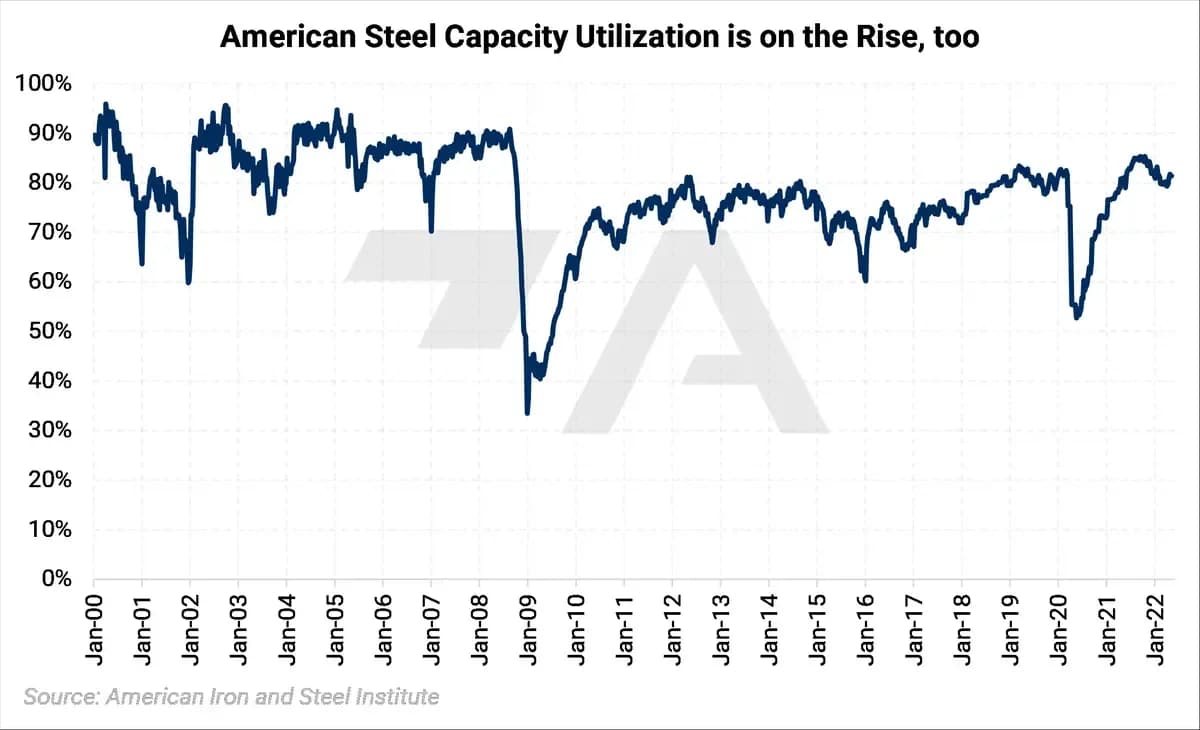
Capacity utilization, which measures how much available production capacity the industry is using, briefly eclipsed pre-COVID levels. It has however dropped since the summer of 2021. |
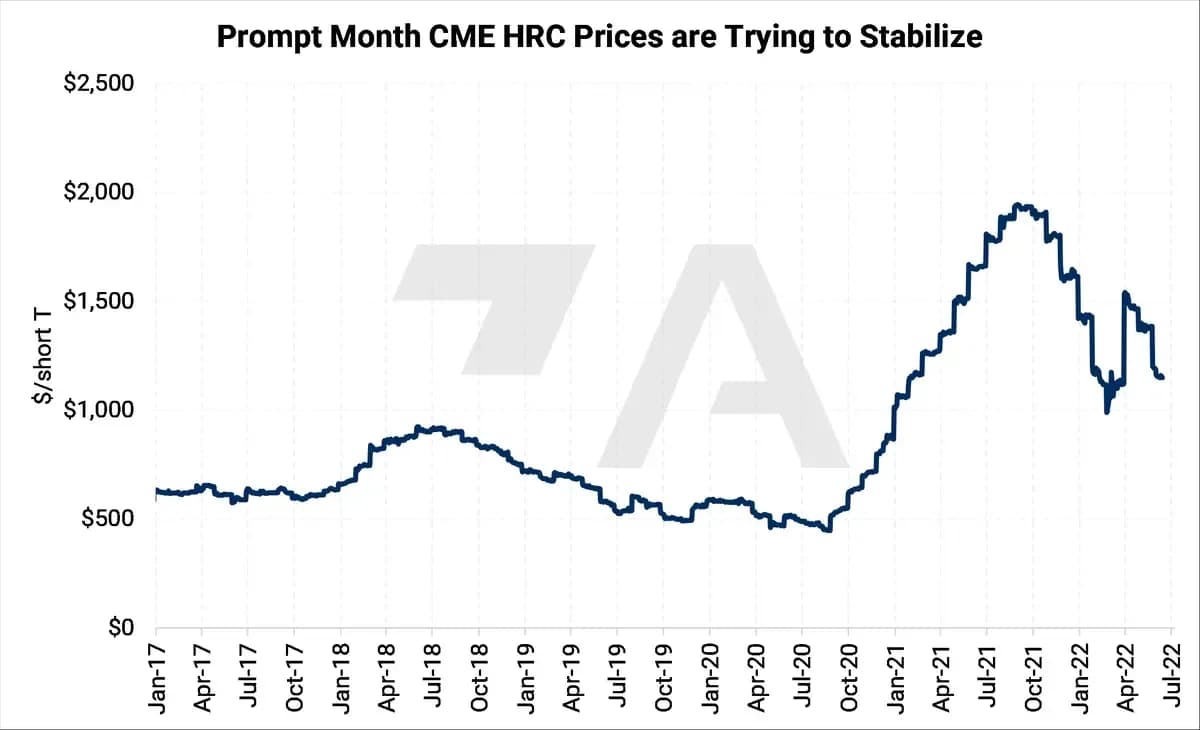
After a record post-Covid bull market, steel prices sank tremendously after peaking in October 2021; however, are now beginning to recover. |
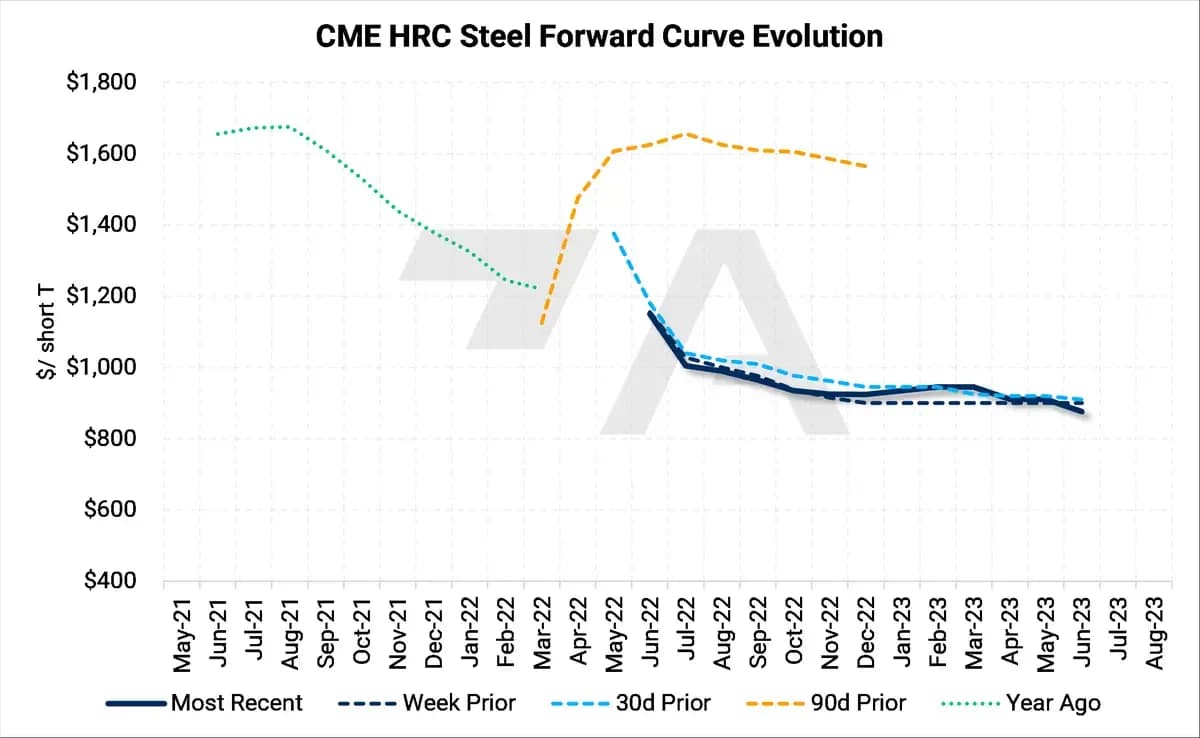
CME HRC Steel’s forward curve is currently quite backwardated through November 2022. A backwardated forward curve favors steel consumers, as they can purchase future needs at a discount to spot prices. These could cap your steel costs, guarding against a price recovery. Such positions are standard for consumer hedging, but they can result in opportunity costs or cash costs if metal prices decline. Please contact AEGIS for specific strategies that fit your operations. |
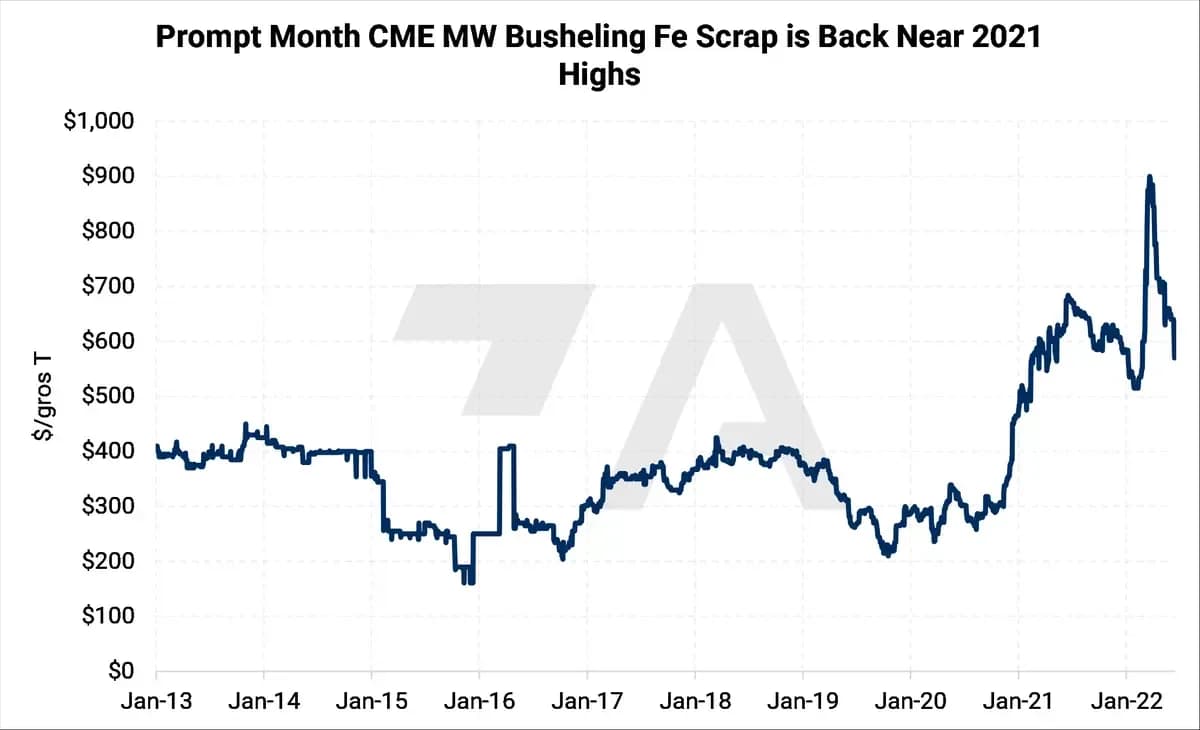
MW Busheling Scrap prices spiked in late March 2022 but have since then. They are still at a historically high level, relative to pre-COVID prices. |
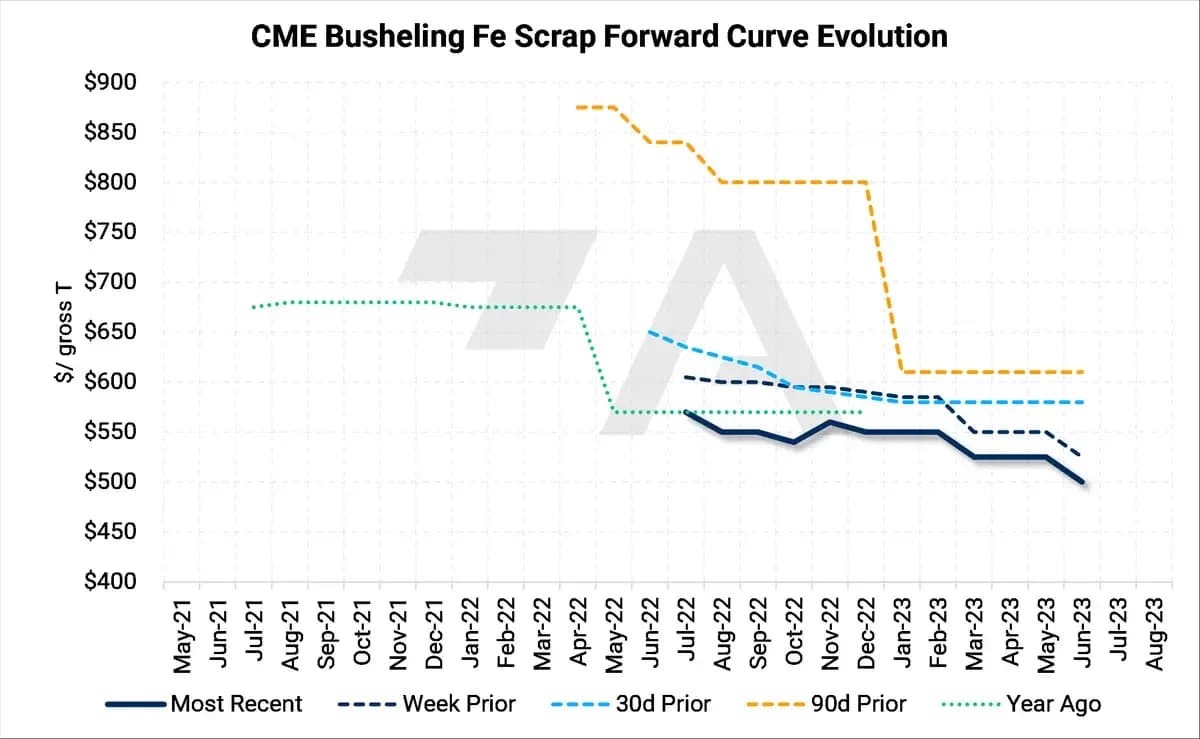
CME Busheling Fe Scrap’s forward curve is backwardated, except for a brief jump in October and November 2022. A backwardated forward curve favors scrap consumers, as they can purchase future needs at a discount to spot prices. The CME MW Busheling Fe Scrap swap market is thinly traded, and there is no options market. Hedging in this market is tricky, so we recommend using strategically placed limit orders. Please contact AEGIS for specific strategies that fit your operations. |