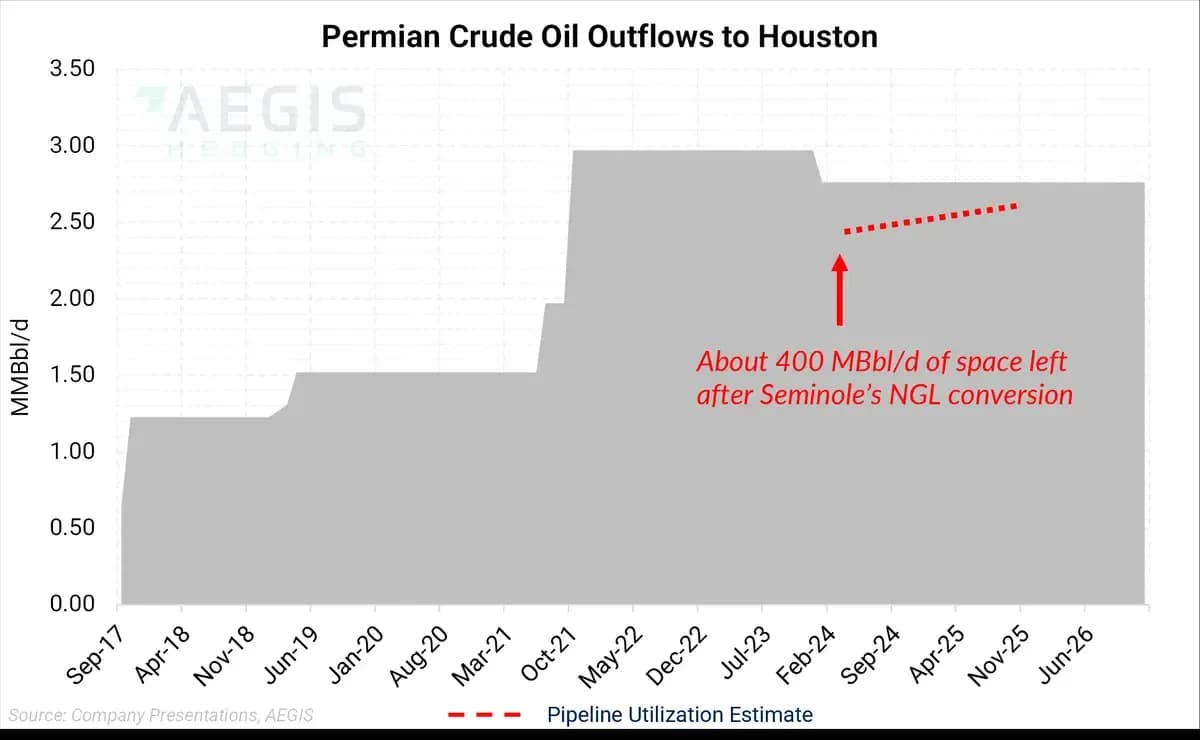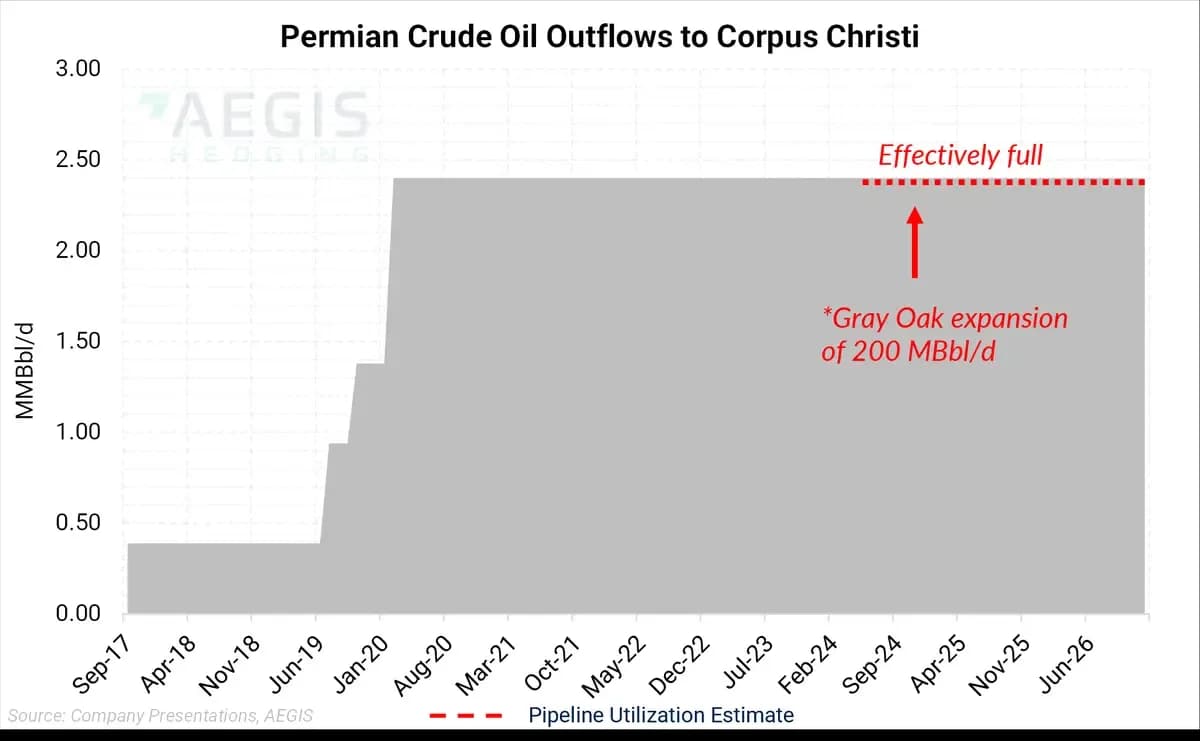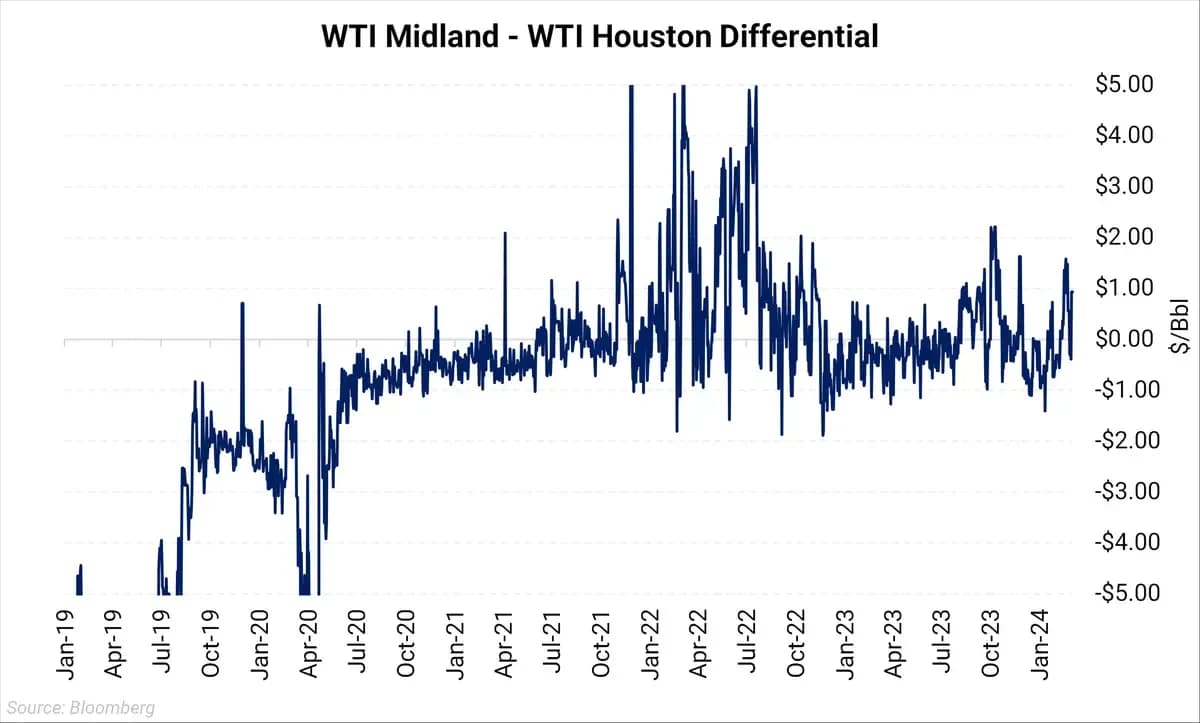
Increasing supply from the Permian is nearing pipeline capacity limits, with utilization along the Permian-to-Gulf Coast route estimated at 90%, expected to reach 100% by year-end The Gray Oak pipeline expansion will add 200 MBbl/d, offering short-term relief but may still be outpaced by the rapid growth in Permian production More attention is focused on the Permian as its supply is growing, pushing the utilization rates of pipelines to the Gulf Coast higher, with expectations to reach full capacity by year-end. The rise in Permian oil production, expected to grow by about 340 MBbl/d this year, according to Rystad estimates, is quickly nearing the limits of current infrastructure. This bottleneck highlights the pressing need for additional infrastructure to accommodate the increasing oil output. Although the Gray Oak pipeline expansion provides a near-term buffer, its additional capacity of just 200 MBbl/d may soon be filled by the pace of production growth. Prices reflect this, too; as the pipelines began to fill, the Midland-Houston (MEH) differential improved from averaging around -$3.08 (2018-2022) to average at about -$0.30 in February. |
|---|
- Increasing supply from the Permian is nearing pipeline capacity limits, with utilization along the Permian-to-Gulf Coast route estimated at 90%, expected to reach 100% by year-end
- The Gray Oak pipeline expansion will add 200 MBbl/d, offering short-term relief but may still be outpaced by the rapid growth in Permian production
Midland-Cushing-Gulf Coast Triangle
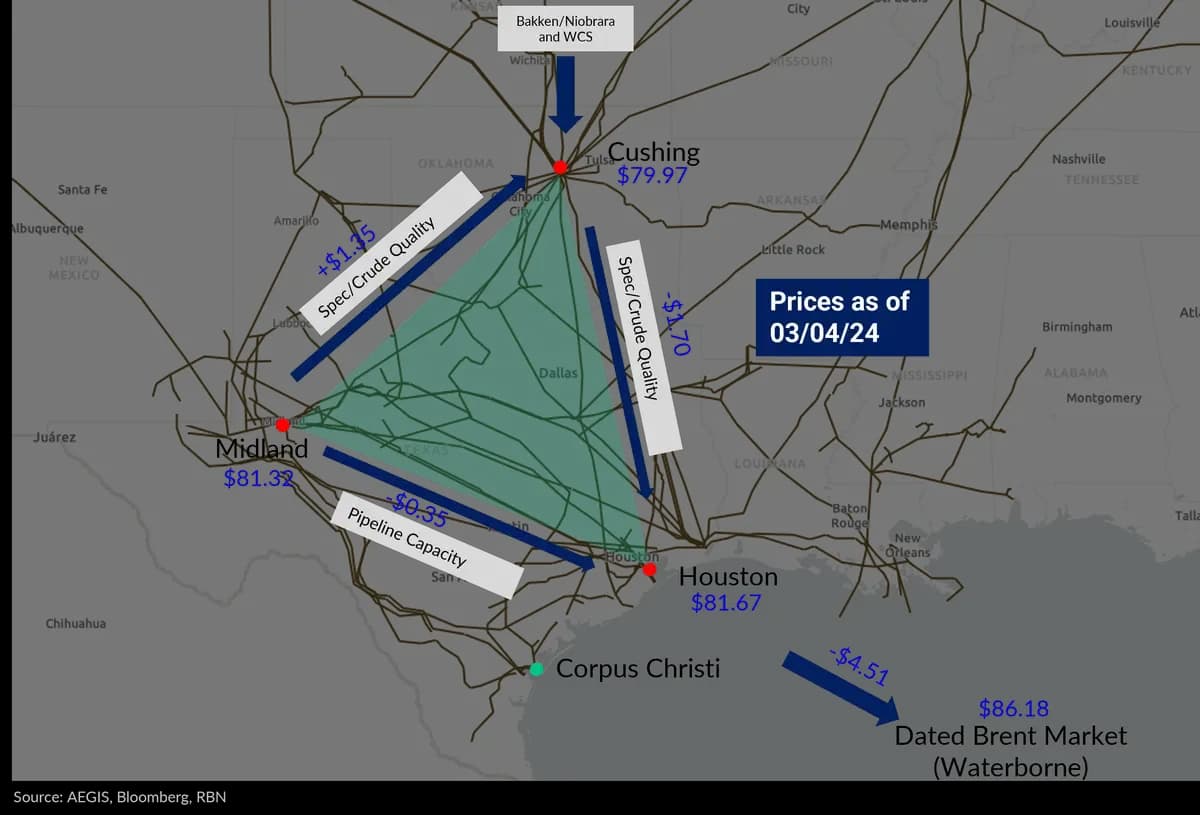
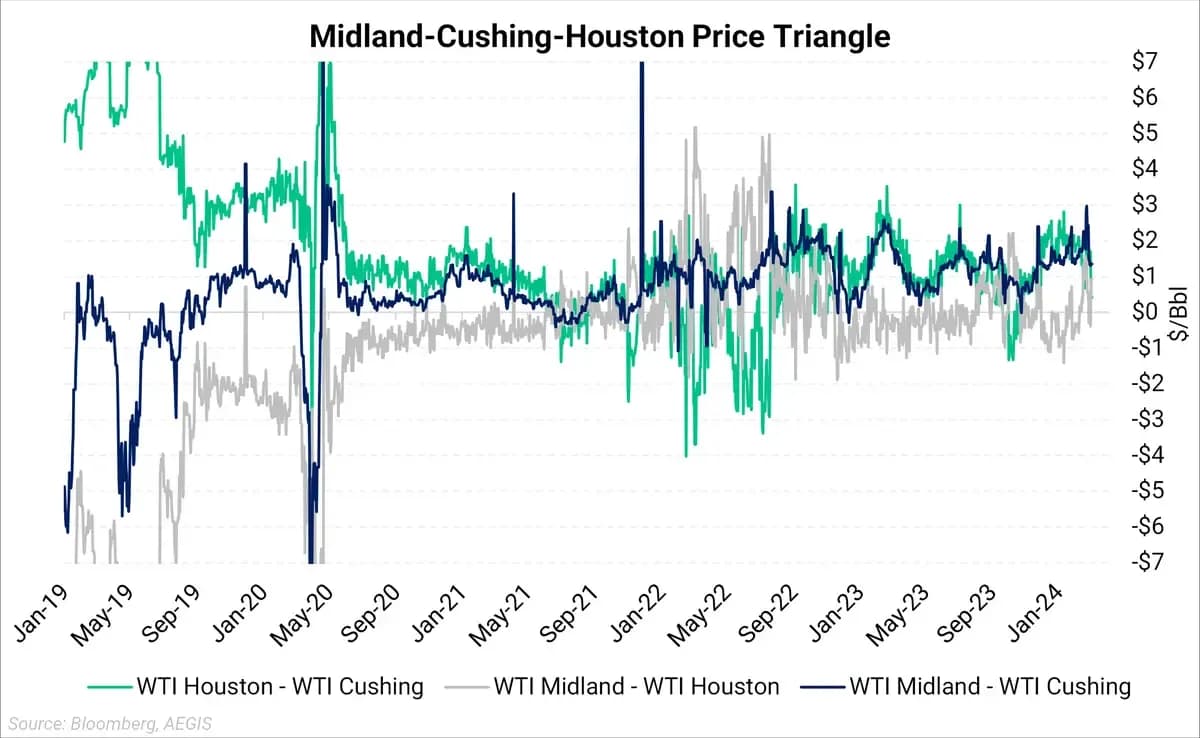
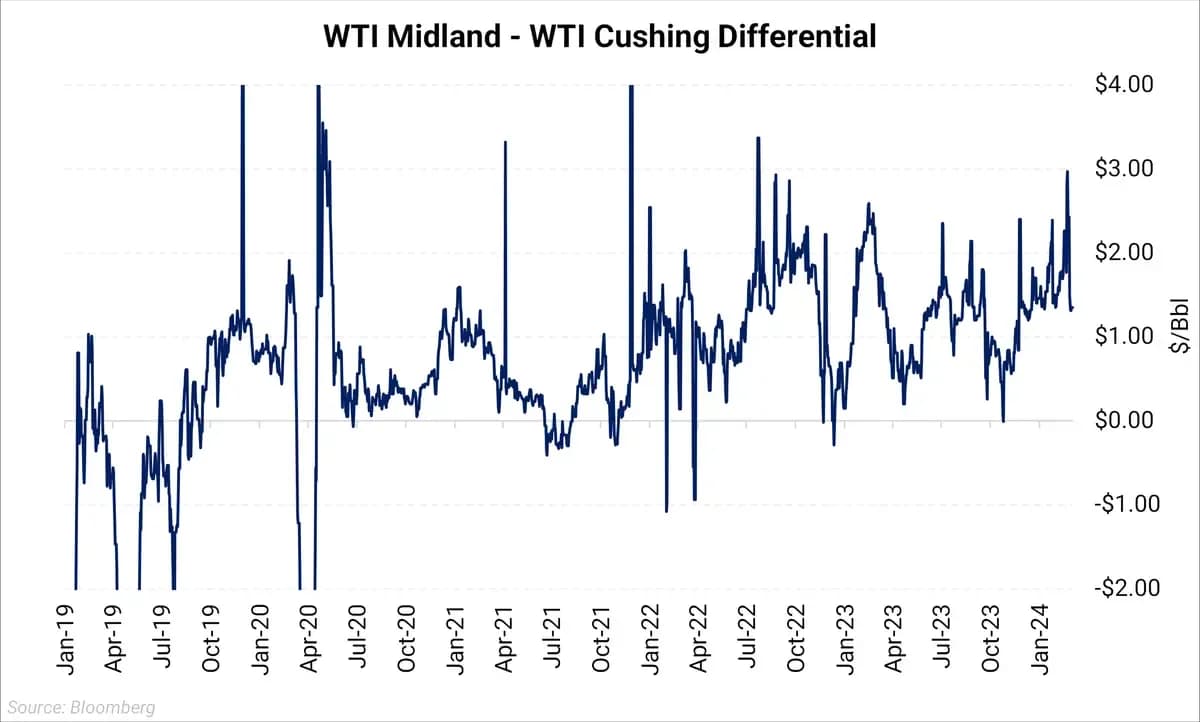
The Midland-Cushing-Gulf Coast “triangle,” as we refer to it, plays an important role in the U.S. oil market. It illustrates the complex interplay between production, storage, and transportation, which ultimately influences global oil prices. Crude oil from Midland, a key production area in the Permian Basin, was traditionally transported to Cushing, Oklahoma, known for its extensive pipeline network for storage, blending, and further distribution. Cushing serves as a pricing point for NYMEX WTI. Oil from Cushing could then be moved to the Gulf Coast, a major refining and export hub. The economics of these movements are dictated by price differentials, which are influenced by crude specifications, transportation costs, export economics, and international demand, driving the flow of oil based on its market value and the cost-effectiveness of delivery to domestic and international buyers. However, with the construction of new pipelines directly connecting Midland to the Gulf Coast, the dynamic within this triangle has evolved. This direct route bypasses Cushing, giving quicker access to international markets, where U.S. crude, especially the light, sweet grade from the Permian Basin, is in high demand. The chart below tracks the change in spreads along the Midland-Cushing-Houston triangle. Both WTI at Midland and WTI at Houston have been trading at a premium versus the benchmark at Cushing. |
|---|