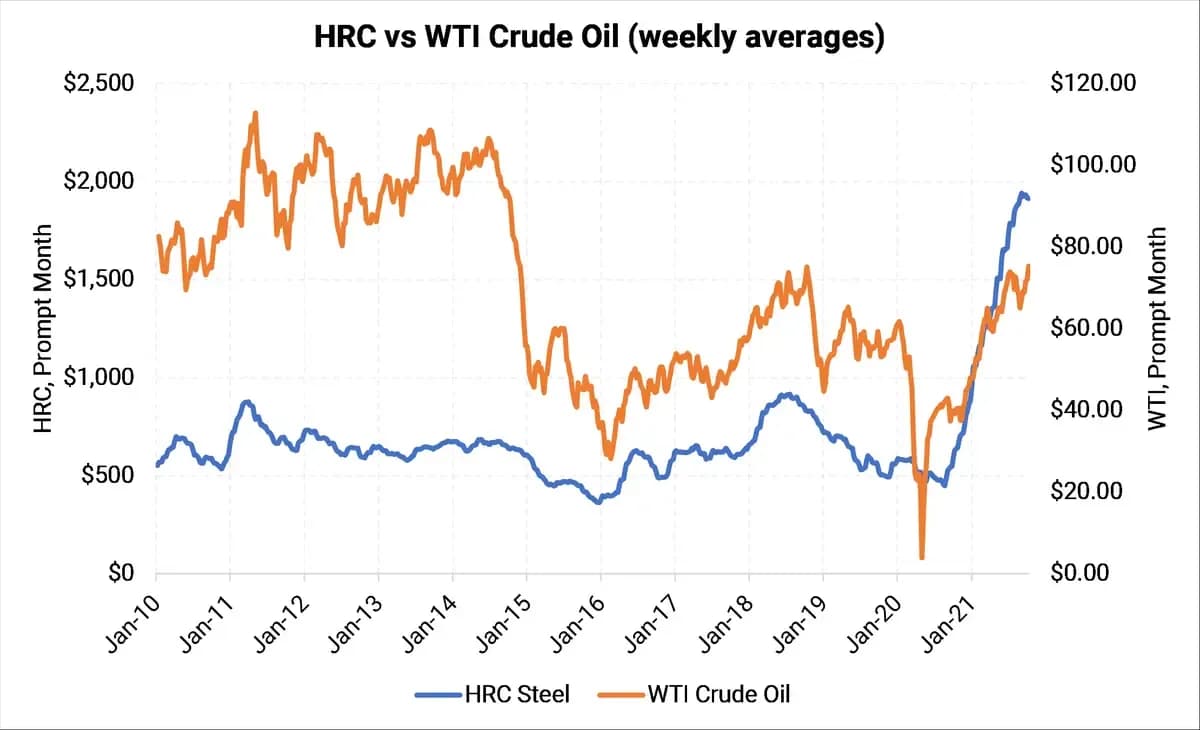
Oil and steel have some economic linkages, and their prices often trend similarly. It is possible to use the more liquid WTI forward curve to hedge steel-price exposures; however, this requires prudent implementation.
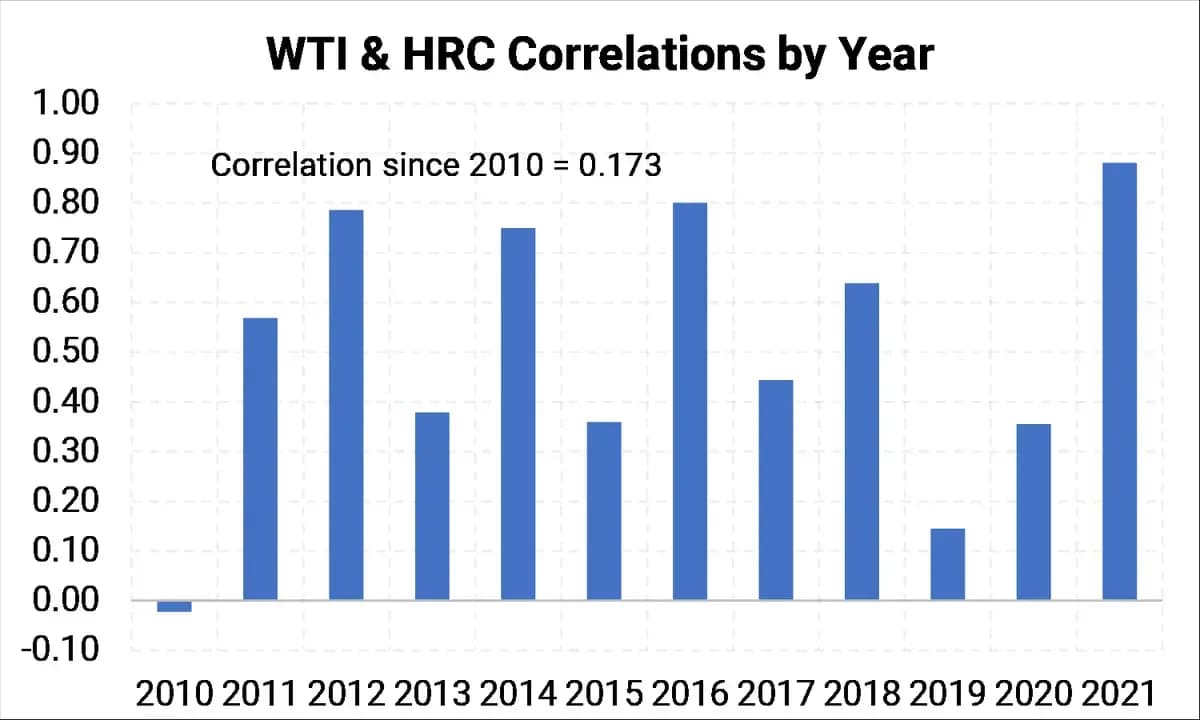
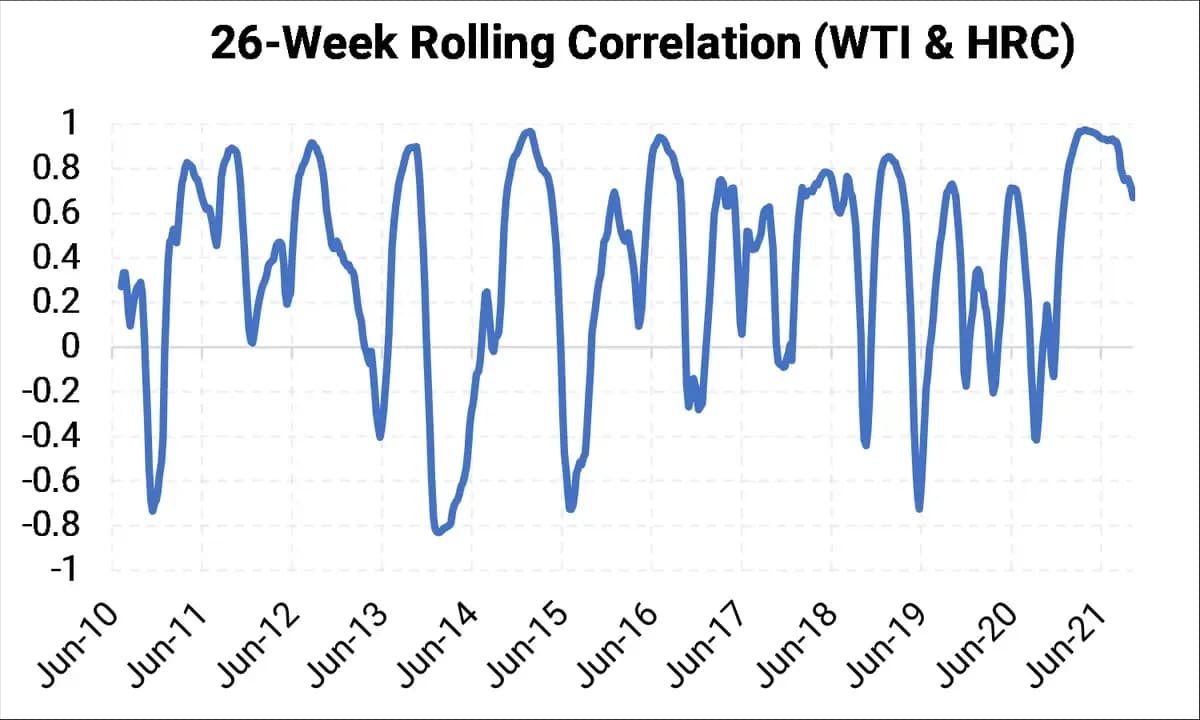
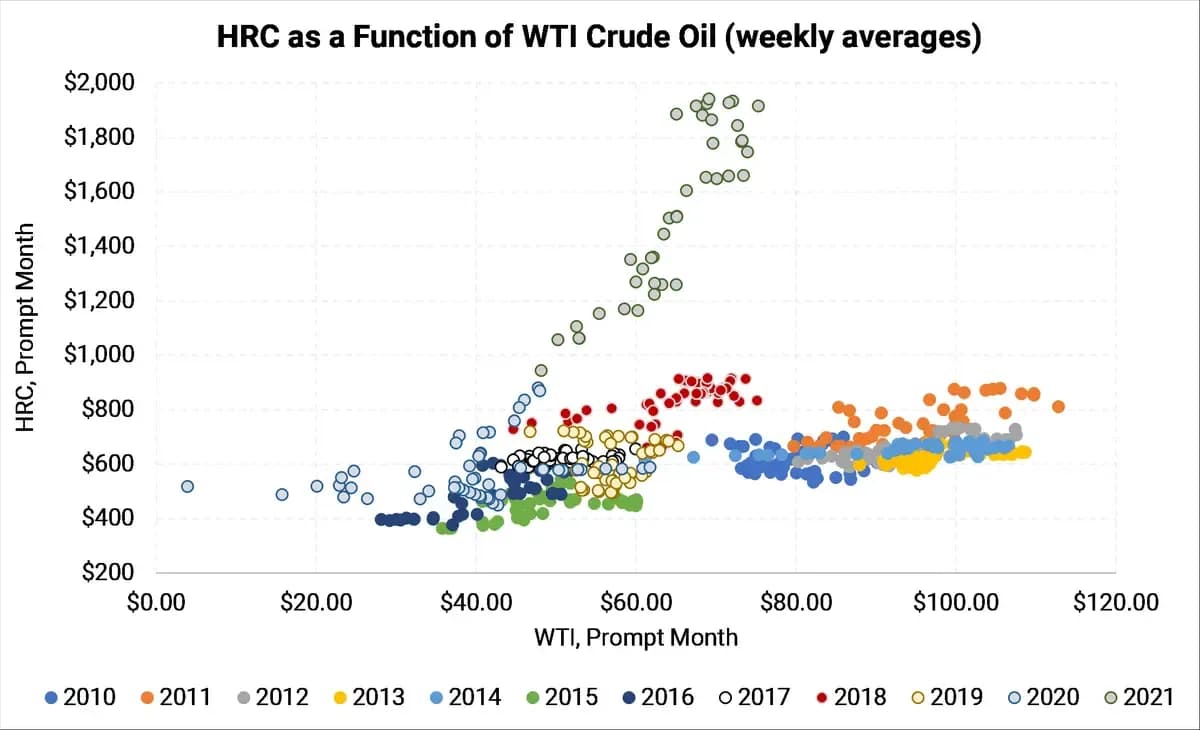
Many AEGIS clients in the upstream oil and gas industry have significant spend and revenue in steel. These upstream players include drillers and equipment producers. Consider the following facts and principles when thinking about steel exposure: HRC Steel is a major input for the oil and gas industry, mostly in the form of well casings, but also other equipment. Demand for such equipment is influenced by volatile crude oil prices. Producers of steel equipment sometimes seek protection from the ebbs and flows of the industry. Similarly, oil-and-gas producers seek protection from rising tubular costs Oil (WTI) could be used to hedge steel prices if the price relationship were consistent and predictable To calculate the relationship between HRC and WTI, we have conducted correlation studies. A correlation of 1.0 means the HRC and WTI always move together. Likewise, a correlation of -1.0 means they always move opposite of one another. A correlation near zero means there is little correlation between the two. As of October 1, HRC & WTI have had a correlation of approximately 0.89 during 2021. However, over a longer-term time horizon, steel prices have little correlation to WTI. For example, since 2010, the correlation has only been 0.173. |
|---|