Temperatures in the Lower-48 (L48) were supportive of natural gas demand throughout the first three weeks of October. Elevated power demand spurred on by higher temperatures have offset the lower than average residential and commercial (rescom) demand.
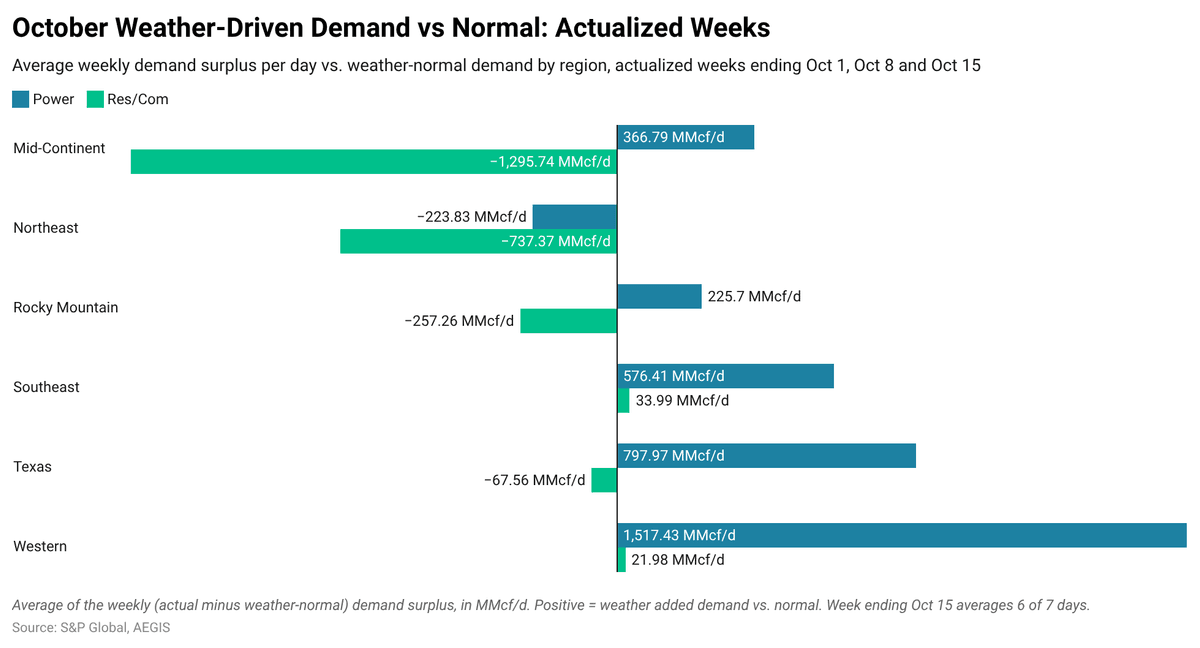
The offsetting effect is more easily understood when broken down by region. The chart below is made by regressing each regions power and rescom demand by temperatures since Jan 1, 2025, and comparing the actual reported rescom and power demand for each region to demand under a weather normal scenario over the last three weeks. Positive numbers indicate demand is greater than a weather normal scenario, indicating bullish weather driven demand, and negative numbers indicate demand below a weather normal scenario.
CWG predicts October to be the fourth warmest on record, with heating degree days expected to run around 40 below the 10 year normal for the month. Furthermore, last Friday CWG was forecasting this to be the second warmest on record, with more recent downward revisions due to forecast changes shifting the second half of the month cooler. The heat in the first half of the month is represented in the elevated power demand seen in the Western, Texas, and Southeast regions, which led the overall L48 weather driven demand higher. The difference of all data points in the chart above points to weather driven demand being 958 MMcf/d over the 10 year normal.
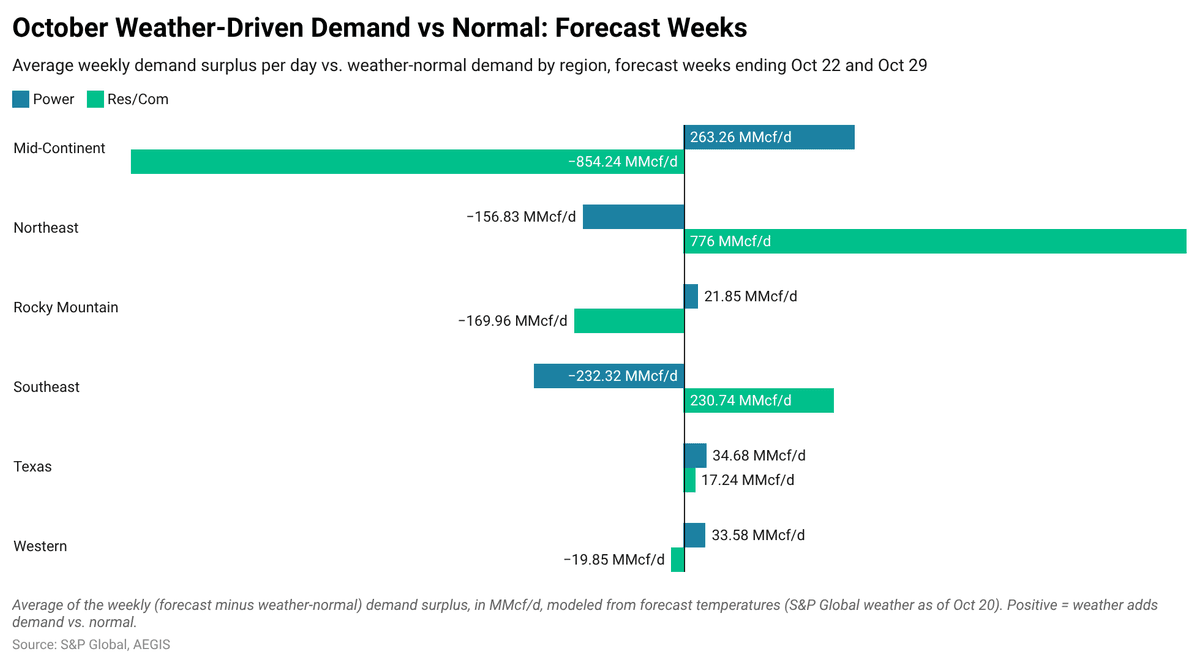
However, the second half of October’s weather is forecasted to be less supportive of natural gas demand. As shown in the chart below, much of the surplus power demand is falling out of the forecast. Meanwhile, elevated rescom demand in the Northeast and Southeast is forecast to be offset by below average rescom demand in the Midcon and Rockies. Overall, L48 demand in the last two full weeks of October is expected to be in line with a weather normalized scenario, only 204 MMcf/d below the average.
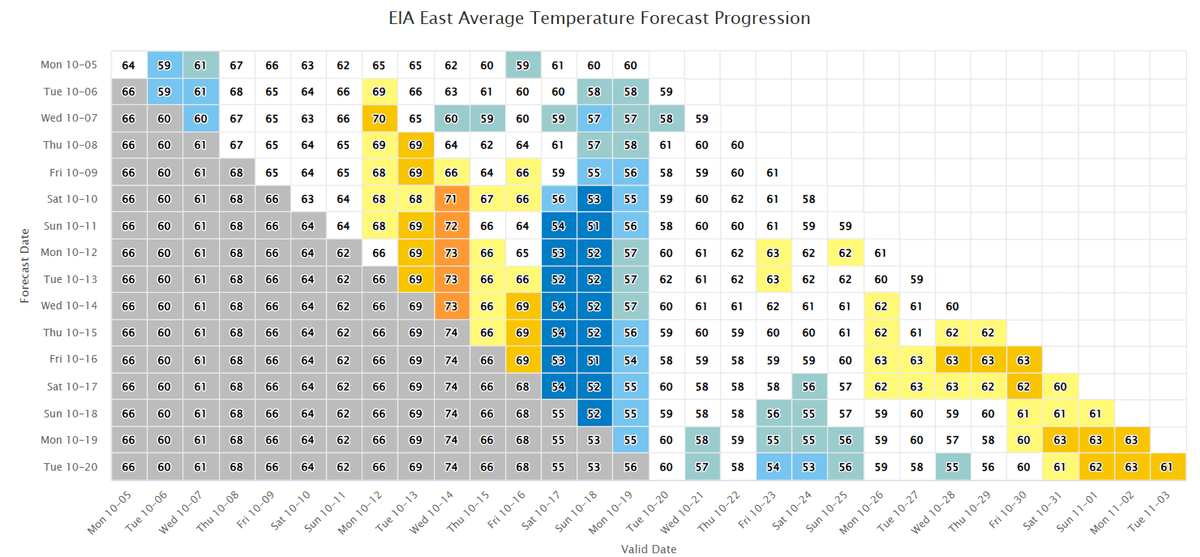
Looking one more week out into the first week of November, the key offsetting rescom demand from the Northeast and Southeast regions appears to dissapate. Average temperatures are forecasted to warm back up into the low 60s, which would lower rescom in both regions without adding much power demand back.
Source: CWG
As we enter the back half of shoulder season and look ahead to Winter 2026/27, sustained heat across the L48 shifts from providing a bullish boost to power demand to potentially extending milder shoulder-season conditions and expanding the surplus heading into winter.