If you expect prices to rise, what hedging tactics could preserve exposure? We have assembled a list of trading tactics that could increase…
If you expect prices to rise, what hedging tactics could preserve exposure? We have assembled a list of trading tactics that could increase floating-price risk.
Please note some of these are dangerous and not recommended. Others could be interpreted as speculative, rather than hedges, if done in isolation and not as a way to adjust an existing hedging portfolio.
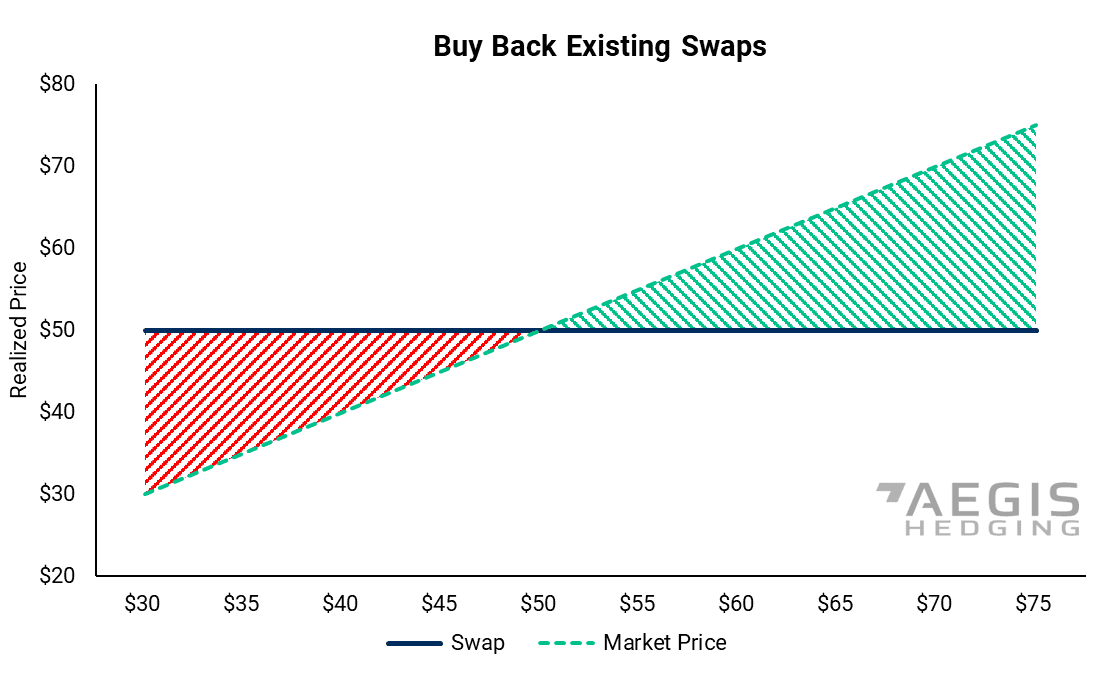
In all these examples, the charts display the intrinsic value of the structure, but they do not show the cost or benefit of any option premia paid or earned. We address the premia in the text.Tactic #1: Buy Back Existing Swaps - Remove the hedge. Counterparty applies the MtM gain (loss) to a new hedge, or payment is made.
In the chart below, the red shaded portion represents the incremental downside risk the trade provides, while the green represents the upside participation gained.Benefit — Upside exposure increases on a portfolio level, even if existing swaps remain on the books. You get to participate in a rally for the bought barrels.
Danger - Zero downside protection remains on the volumes bought back. Downside exposure is increased, and some lending agreements may not allow this strategy if it brings a portfolio out of compliance.
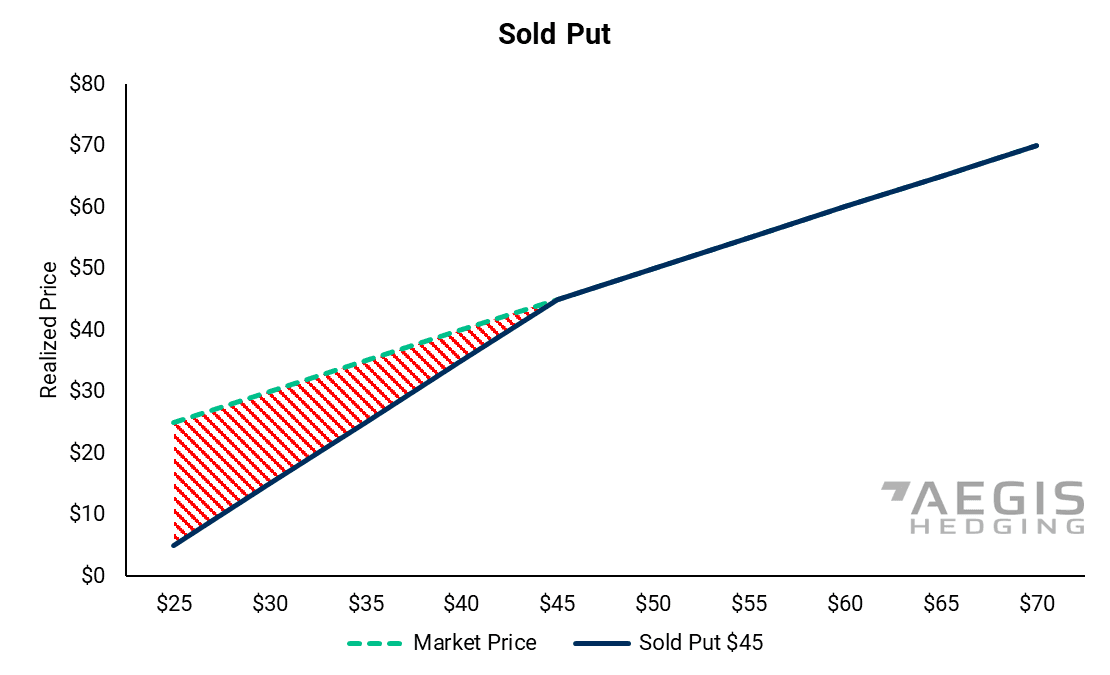
Tactic #2: Sell put options - Earn a premium by increasing your exposure to low prices.
In the chart below, the red shaded portion represents the downside protection lost by utilizing this tactic. Typically, we would not recommend utilizing trades that remove downside protection. However, the proceeds from selling puts could be used to adjust a hedge, perhaps to uplift a floor or cap. Benefit — Small premium earned, which could be divested into paying for structures that would allow upside participation.
Danger — It doubles your risk if prices were to fall below your strike.
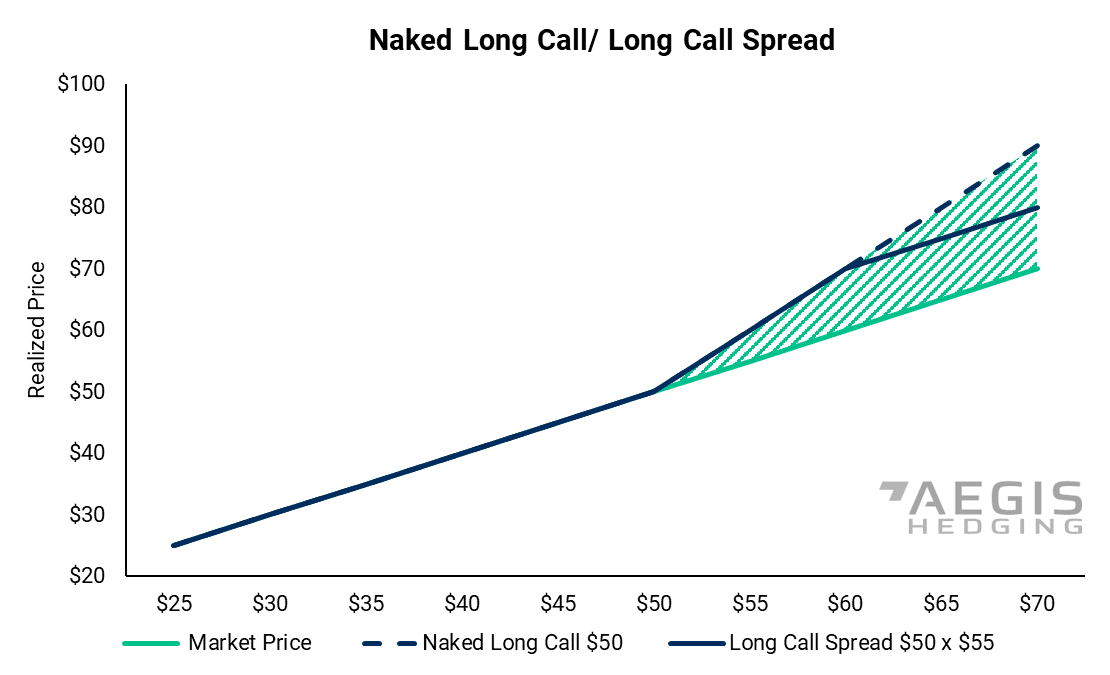
Tactic #3: Buy Call option or Call Spread - Purchase exposure to prices above the market. If a call is purchased with a strike price of an existing swap, this can create a synthetic put, which would allow total upside participation while maintaining downside protection. Still, this could be expensive.
In the chart below, the green shaded portion represents the upside exposure gained by utilizing this structure. The long call helps increase upside participation but can be expensive on its own. If a call is sold above the bought call, it would help offset the premium but limits the upside participation to the market price minus the spread between the legs of the call spread. Benefit — Losses are limited to the premium paid and tailored to your point of view on prices.
Danger — Expensive; Can be interpreted as speculative.
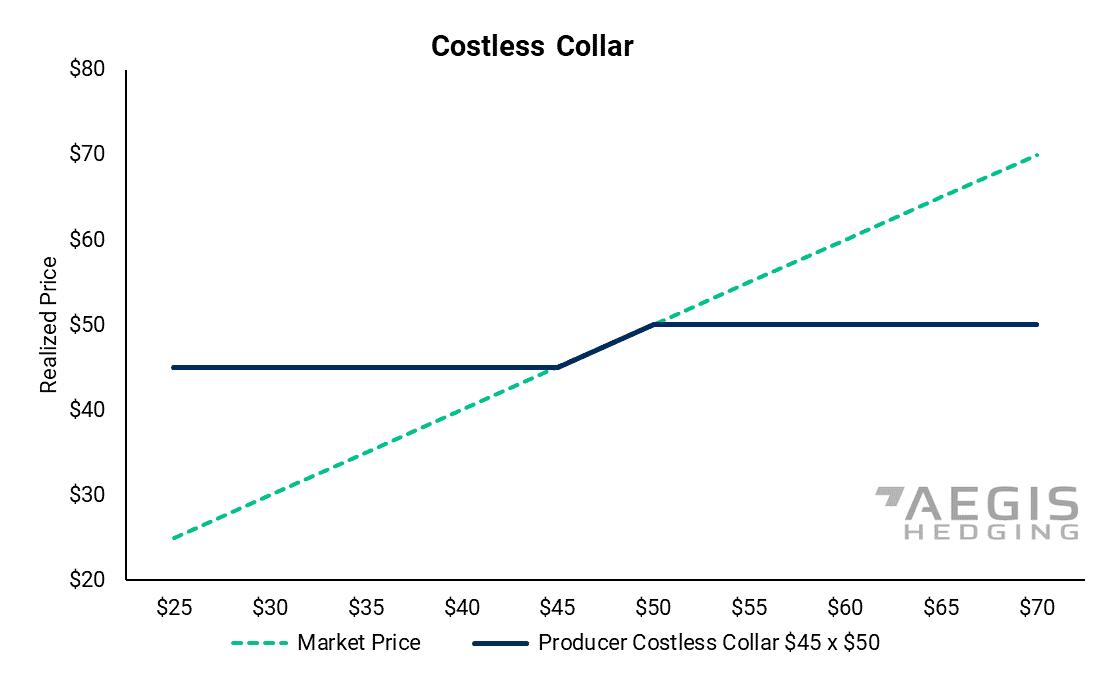
Tactic #4: Collars (Costless or Enhanced) - Sell a call option and use the proceeds to buy a put option.
The chart shows the mechanics of a costless collar and how a producer could take advantage of price fluctuation in between the "floor" and "cap". Aside from swaps, a costless collar is one of the most commonly used hedging strategies. However, if you believe prices will rise there are a few ways to tailor the structure to achieve your hedging goals such as paying a small premium for an enhanced collar. Benefit — Good, straightforward protection; Can gain more upside by purchasing a higher cap (enhanced) or lowering the floor.
Danger — Very little if the floor is set appropriately.
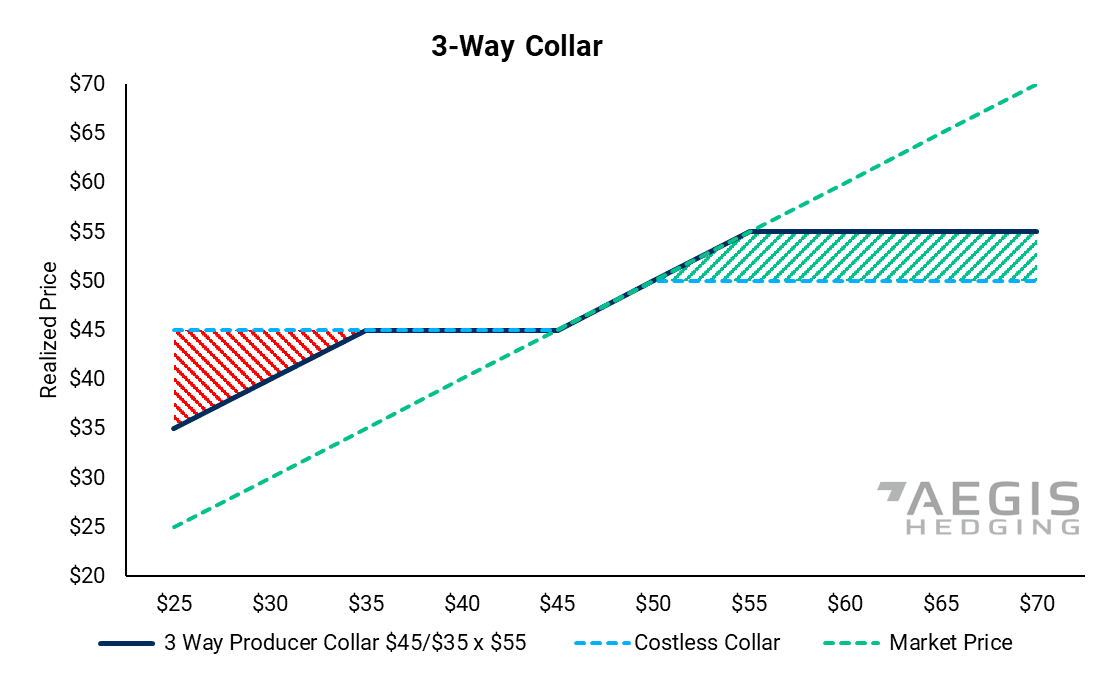
Tactic #5: Three-way Costless Collar - Take on some downside risk for a higher cap/ceiling.
The chart shows the upside gained and downside protection lost by this structure, as compared to an ordinary (two-way) collar. The 3-way collar allows you to gain upside without having to pay a premium but technically your downside protection will be limited to the spread between the put options. Benefit — Costless; increases exposure to higher prices than does a collar.
Danger — Downside protection is lowered.
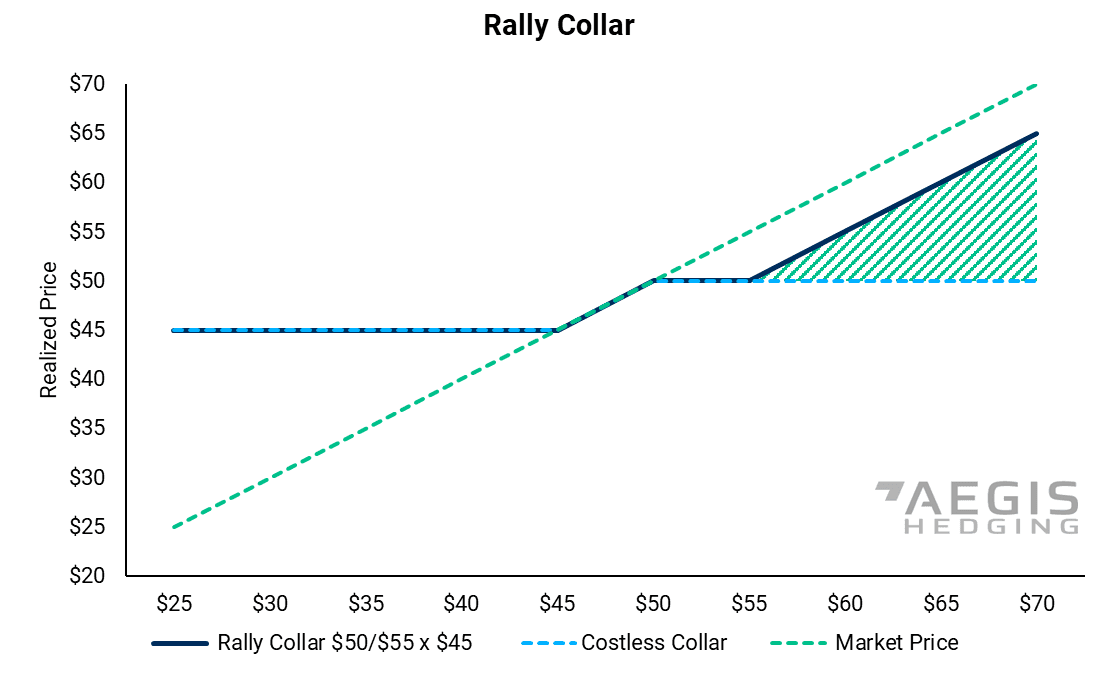
Tactic #6: "Rally" Collar - Combine a collar with a higher call option
The chart shows the upside gained from a rally collar, though at a cost of the premium of the call option. A rally collar is an attractive, albeit expensive strategy that allows producers greater upside participation.Benefit — Maintains downside protection with a floor and gains exposure if prices move much higher. It can be costless.
Danger — Net cost is higher than a vanilla collar.
Want this in your inbox?
AEGIS market analysts publish research across crude, natural gas, NGLs, refined products, metals, and rates.
We use a few essential cookies to make our site work, including one that counts how many reports you have opened. Analytics cookies are used only with your permission, and you can change your mind at any time. Learn more about cookies in our privacy policy.